
Shockley's goldenhead
Acamptopappus shockleyi
Description
Growing requirements
Shockley's goldenhead (Acamptopappus shockleyi) is a perennial desert shrub belonging to the Asteraceae family. This species is native to the arid environments of the Southwestern United States, thriving specifically in the Mojave Desert and associated mountain ranges.
The plant is highly adapted to extreme temperature fluctuations and severe water scarcity. It typically occupies rocky, well-drained slopes and alluvial fans, where it can survive on minimal precipitation and intense solar radiation.
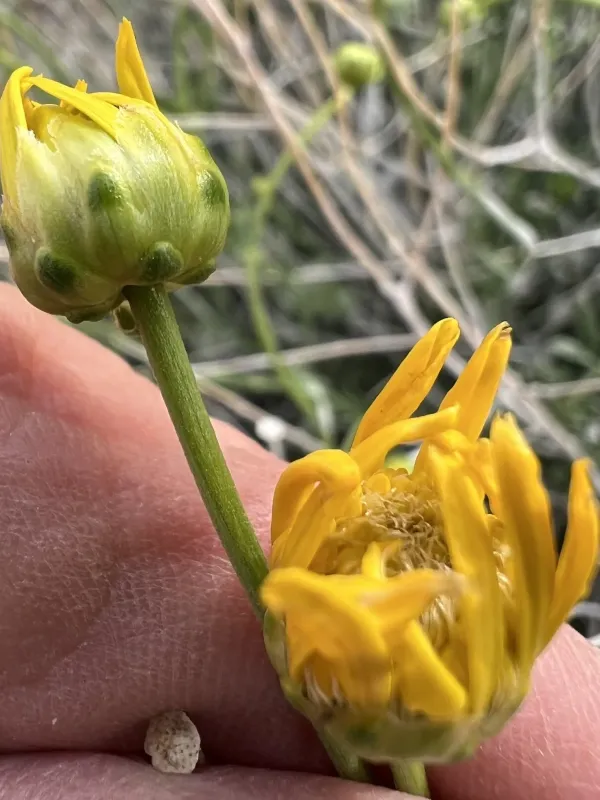
Botanically, it is characterized by its compact habit and gland-dotted leaves, which serve as an adaptive mechanism to reduce transpiration. The small yellow flower heads are characteristic of the daisy family, appearing during the spring and early summer seasons.
Cultivation requirements are strict: the plant necessitates full sun exposure and perfectly draining, rocky or sandy soil. It does not tolerate high humidity or waterlogged conditions, which are likely to cause rapid root rot and overall decline of the shrub.
While not a commercial commodity in the traditional sense, Acamptopappus shockleyi is valued in ecological restoration projects and xeriscaping. Its ability to stabilize soil in harsh arid zones makes it a subject of interest for desert land management.
Main diseases and pests
The primary threats to native populations of Shockley's goldenhead include the invasion of non-native fire-prone grasses and increased anthropogenic impact. Desert wildfires, exacerbated by climate change, are the most significant danger to mature shrubs.
In terms of pathogens, the species is susceptible to various soil-borne fungi if exposed to moisture levels exceeding its natural requirements. Root crown decay is the most common issue observed when cultivation efforts fail to mimic the arid drainage conditions.
Insects and herbivores in its natural range consume parts of the foliage, but these interactions are generally balanced within the native ecosystem. No specialized, economically devastating agricultural pests have been documented for this non-commercial plant.
Human activities such as infrastructure development and off-road vehicle usage pose physical threats to the habitat. These disturbances lead to habitat fragmentation, reducing the reproductive success of the plant populations.
Disease management strategies for this species are focused on environmental control rather than chemical interventions. Avoiding over-irrigation and maintaining soil structure are the only proven methods to keep the plants healthy in nursery settings.