
California spikenard
Aralia californica
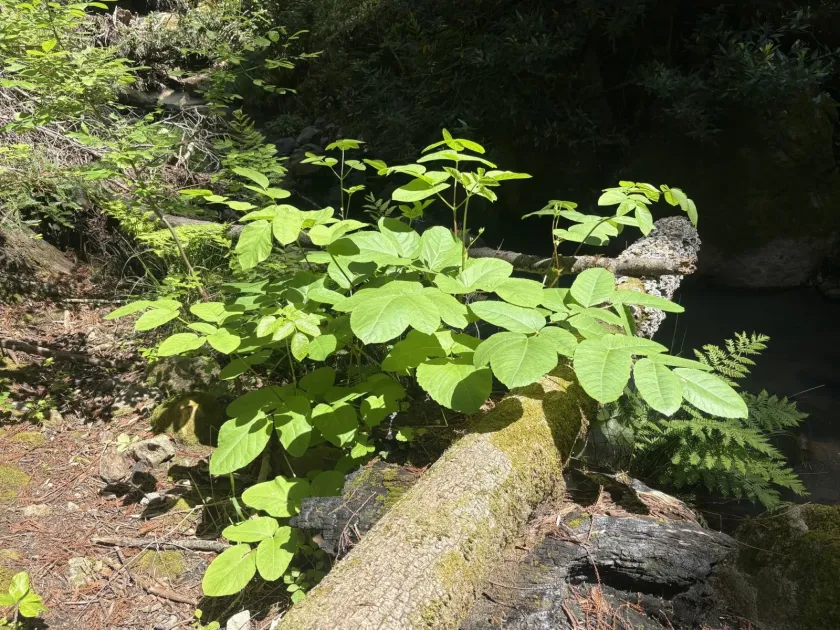
Description
Sowing dates
Propagation of California spikenard is most commonly achieved through seeds or the division of rhizomes. The seeds possess a deep dormancy period, necessitating cold stratification for several months to ensure successful germination.
The ideal time for sowing seeds in the ground is late autumn, allowing the seeds to undergo natural winter stratification in the open field. If planting occurs in spring, seeds must be artificially chilled in a refrigerator.
For vegetative propagation, rhizome division should be performed in early spring before the onset of active sap flow. This method facilitates faster development of a mature plant and preserves the specific characteristics of the parent stock.
Seeds should be sown at a depth of no more than 0.5–1 cm. Maintaining consistent soil moisture is crucial, although waterlogging must be avoided, as the small seeds are highly sensitive to substrate desiccation during germination.
Emergence is generally slow, making it essential to keep the nursery area free from weeds, which can easily outcompete the young, slow-growing seedlings for nutrients and light.
Growing requirements
California spikenard is a robust perennial belonging to the Araliaceae family, native to the moist, forested regions and riparian habitats of California.
The crop requires high soil moisture levels. It thrives best in nutrient-rich, loamy soils with a neutral or slightly acidic pH, provided that there is excellent drainage to prevent root rot.
This plant is shade-tolerant, which is a key consideration when selecting a planting location. Exposure to direct midday sun can scorch the large, pinnate leaves, making dappled shade an ideal environment.
Aralia requires protection from strong, drying winds. In temperate climates, it is important to mulch the root zone with organic matter before winter to protect the renewal buds from freezing temperatures.
Aralia requires significant growing space, as a mature plant can reach heights of two meters or more, developing a sprawling and impressive habit that necessitates careful site planning.
Main diseases and pests
Primary cultivation challenges are often linked to excessive soil moisture, which promotes the development of root rots. Careful regulation of irrigation is vital, particularly during periods of lower temperatures.
Pests such as aphids and spider mites may infest the tender young foliage, especially during drought-prone seasons. Regular monitoring of the shrub canopy is essential for early detection.
Slugs and snails pose a significant threat to young emerging shoots in early spring, as they can quickly consume the succulent foliage, thereby weakening the plant and impacting its overall vigor.
Leaf spot diseases may occur if air circulation around the shrub is poor. It is advisable to remove infected foliage promptly and avoid overhead watering in the evening to keep the leaves dry.
To prevent the spread of fungal pathogens, maintain good horticultural hygiene, remove all plant debris during autumn clean-up, and perform regular sanitary pruning of dead or diseased branches.