
Phaeoceros laevis
Phaeoceros laevis
Description
Growing requirements
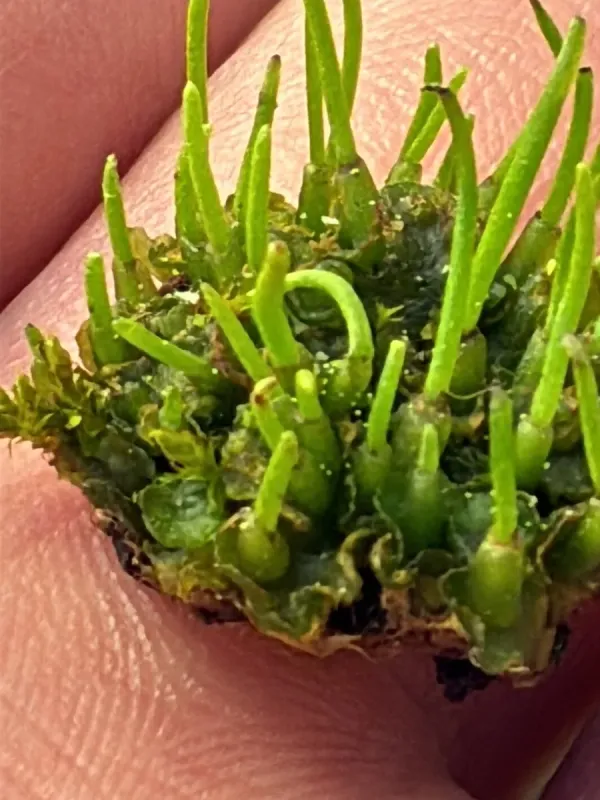
Phaeoceros laevis, commonly known as a type of hornwort, belongs to the family Anthocerotaceae. It is a non-vascular plant characterized by a simple, flattened thallus and a unique life cycle involving the production of horn-like sporophytes.
This species is globally distributed, found in temperate and tropical regions across the world. It naturally thrives in moist, disturbed soils, such as riverbanks, roadside ditches, and damp clay substrates where other vegetation is sparse.
A key biological trait of Phaeoceros laevis is its symbiotic relationship with cyanobacteria of the genus Nostoc. These bacteria reside within the thallus, providing the plant with fixed nitrogen, which helps it colonize nutrient-poor environments successfully.
The plant requires high levels of soil moisture and prefers neutral to slightly alkaline soil pH. It is a shade-tolerant plant in some conditions but generally performs best in areas with moderate sunlight exposure that do not dry out quickly.
In agricultural contexts, Phaeoceros laevis acts as a bioindicator for soil health and moisture status. It signifies areas with minimal chemical disturbance and high ecological stability, often found in unmanaged field margins or drainage zones.
Main diseases and pests
The most significant threat to Phaeoceros laevis populations is moisture depletion. Because the plant lacks vascular tissues for long-distance water transport, rapid drying of the substrate leads to immediate physiological stress and death.
Intensive agricultural practices, particularly the application of chemical fertilizers and herbicides, are highly destructive. The chemical alterations in soil composition often disrupt the symbiosis with nitrogen-fixing bacteria.
Competition from fast-growing weeds and invasive vascular plants often shades out the hornworts. As a slow-growing plant, it cannot compete for space in nutrient-rich environments where larger vegetation dominates the canopy.
Mechanical disturbance of the soil, such as deep plowing or heavy traffic, can bury the thalli and destroy the delicate micro-habitats required for spore germination and colony establishment.
Although it does not suffer from typical crop diseases, extreme cold or waterlogging can lead to thallus decay. In such conditions, pathogenic fungi may colonize the weakened plant tissue, accelerating its degradation.