
Salicornia procumbens
Salicornia procumbens
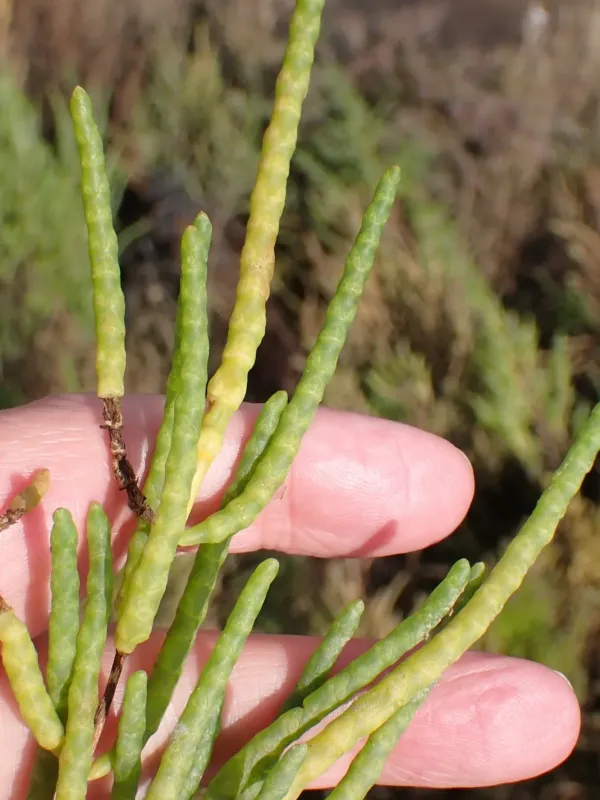
Description
Sowing dates
Sowing of Salicornia procumbens is best performed in the spring when soil temperatures reach a consistent 10–12 degrees Celsius. Optimal planting timing is crucial to avoid late frosts while ensuring a long enough growing season for full maturation.
Due to the extremely small size of the seeds, they must be sown very shallowly, usually at a depth of no more than 0.5 to 1 centimeter. Proper soil contact is necessary, which is why broadcasting followed by light rolling is the most common practice.
To ensure uniform distribution and avoid overcrowding, precise drilling or automated broadcasting is recommended. Proper spacing, typically around 10–15 centimeters between plants, encourages better branching and overall biomass production.
Immediate irrigation after seeding is a mandatory step to keep the top layer of soil moist. This promotes rapid and uniform germination, which is the foundation of a successful crop stand in saline conditions.
Because the seeds are sensitive to moisture fluctuations in the first week, maintaining a steady supply of irrigation water during the initial emergence phase significantly improves seedling establishment rates.
Growing requirements
As an obligate halophyte, Salicornia procumbens thrives in environments with high salinity where traditional crops cannot survive. It uses this salt to maintain osmotic balance, effectively turning a stressor into a survival advantage.
The plant requires full sun exposure and performs poorly in shaded areas. High light intensity is a prerequisite for proper development of its succulent, photosynthetic stems which characterize this species.
Regarding soil preferences, it grows best in salt marshes, sandy coastal soils, and areas with high chloride concentrations. While it can handle poor soil nutrition, it responds well to controlled application of nitrogenous fertilizers.
Consistent water availability is essential for maintaining growth. While it tolerates salty water, it cannot survive extreme drought for extended periods, necessitating efficient irrigation management in commercial settings.
Biological resilience is a key feature of this crop, as it manages salt by sequestering it into vacuole storage within its cells. This mechanism allows it to flourish under conditions that would be toxic to most other vascular plants.
Yield
Crop yields for Salicornia procumbens are primarily a function of soil salinity levels and the availability of water. Under optimal conditions, the plant can produce significant biomass per hectare, making it a viable specialty crop.
The primary economic output is twofold: the green biomass, often harvested for fodder or food applications, and the seeds, which are rich in high-quality oil. Seed yields vary depending on the length of the growing season and environmental conditions.
Intensive cultivation using saline irrigation systems has been shown to increase yields by approximately 20–30% compared to rain-fed or irregularly irrigated fields. This indicates the importance of precise water management.
Nutrient management on saline soils is a challenge because salinity can affect the bioavailability of certain minerals. Balanced fertilization is required to maximize both vegetative growth and the subsequent reproductive seed output.
Total yield is also influenced by planting density. Finding the right balance between plant population and individual growth space is critical to optimizing the total output of dry matter per hectare in diverse growing zones.
Main diseases and pests
Root rot is the most common pathology for this crop, typically occurring in poorly drained soils. Excess stagnant water creates anaerobic conditions that facilitate the growth of pathogenic fungi in the root zone.
Pests are generally less of a problem for Salicornia due to the high salt content in its tissues. However, certain lepidopteran species and aphids can occasionally target young, succulent shoots, requiring careful monitoring.
Overcrowded fields can be susceptible to fungal blight during periods of high humidity. Maintaining adequate spacing between rows helps facilitate airflow, which is the primary natural defense against leaf and stem fungal diseases.
Mechanical damage during cultivation or maintenance can serve as an entry point for secondary infections. Therefore, minimizing traffic within the field once the plants are established is a recommended protective practice.
Weed competition is relatively low due to the extreme soil conditions, but early-stage competition can be detrimental. Mechanical weeding in the first weeks of the season is usually sufficient to give the crop an advantage.
Harvesting
Harvesting is performed at the end of the growing cycle when the plant transitions from green to a reddish or brownish hue, signaling that seed development is complete and vegetative growth has concluded.
Commercial harvesting is typically done with modified combine harvesters. Because the seeds are very small and light, setting the header height and air speed correctly is essential to minimize harvest losses.
Post-harvest, the succulent stems contain high moisture content and must be dried quickly to prevent spoilage. Spreading the biomass in thin layers in sunny conditions is the standard method for field-level drying.
Cleaning the seeds is a meticulous process that requires high-precision screen cleaners to remove vegetative debris. Proper cleaning increases the marketability of the product and ensures a longer storage life.
Storage must take place in a cool, dry environment with good ventilation. Protecting the harvest from moisture and direct sunlight is vital to preserve the quality of the lipids contained within the seeds.