
Floating arrowhead
Sagittaria natans
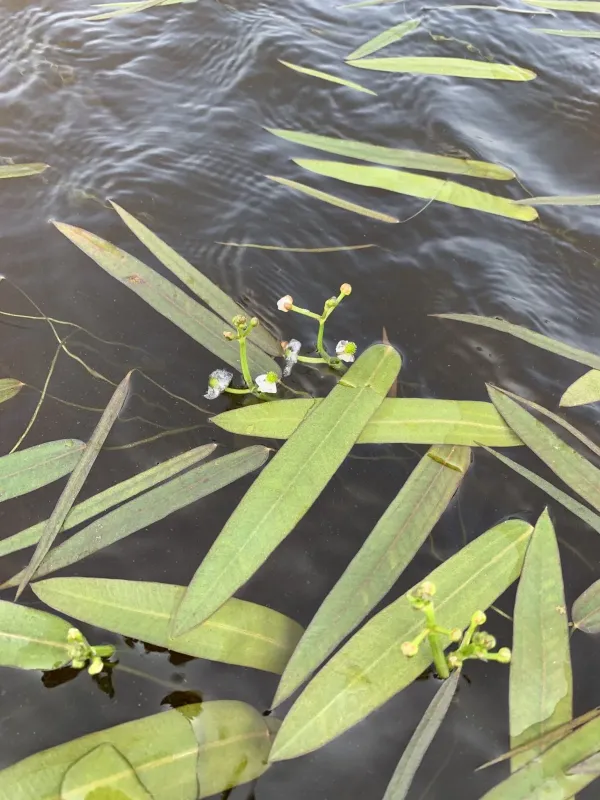
Description
Sowing dates
The floating arrowhead belongs to the Alismataceae family. In natural conditions, the plant reproduces both through seeds and vegetatively using rhizomes and stolons.
Planting for cultivation or land reclamation purposes is generally carried out in spring when water temperatures reach 15–18 degrees Celsius.
For successful establishment, rhizome fragments are planted into the bottom substrate at a depth of 20 to 50 centimeters, ensuring adequate planting density for rapid spread.
Seed propagation requires preliminary stratification in cold water, which increases germination rates when sowing into prepared aquatic substrates.
When cultivating in commercial ponds, it is crucial to maintain stable water levels, as the plant is highly dependent on constant moisture for its root system.
Growing requirements
This plant prefers standing or slow-moving water bodies with silty or sandy-silty bottoms rich in organic matter.
For normal development, the floating arrowhead requires intense sunlight, as shading leads to elongated stems and a reduction in overall crop vitality.
Optimal water temperatures during the summer period should range between 20–25 degrees, although the plant can tolerate temporary temperature drops.
The water pH should be neutral or slightly alkaline, which is a key condition for the absorption of nutrients from the aquatic environment.
The crop possesses high adaptability but is extremely sensitive to heavy chemical pollution in water bodies and excessive hydrocarbon contamination.
Yield
The productivity of the floating arrowhead is estimated based on the biomass that the plant can produce during a single growing season in aquaculture conditions.
The plant's rhizomes contain significant amounts of starch, making them a valuable source for obtaining biologically active compounds or animal feed additives.
Green biomass yield is directly dependent on planting density and the level of mineral nutrient saturation provided to the bottom substrate.
In natural environments, floating arrowhead biomass serves as a vital component of the food base for herbivorous fish species, contributing to pond productivity.
Under intensive cultivation, it is possible to harvest the aerial parts of the plant multiple times per summer, allowing it to be used as a phytoremediator.
Main diseases and pests
The floating arrowhead is susceptible to fungal infections that develop in stagnant water when there is a lack of natural circulation in the pond.
The main pests for the crop include various species of aquatic insects, specifically larvae of certain flies and beetles that damage the plant's leaf blades.
Excessive growth of filamentous algae in the pond can suppress the growth of the arrowhead due to competition for mineral nutrients and sunlight.
In overcrowded planting conditions, yellowing and rotting of leaves often occur, caused by oxygen deficiency in the bottom layer of the substrate.
To protect plantations, it is recommended to conduct timely mechanical cleaning of the water body and monitor plant health to detect early signs of damage.
Harvesting
Harvesting or thinning of the plantings is conducted at the end of the growing season, when most nutrients have translocated to the rhizomes.
For forage harvest, specialized mechanical cutters designed for aquatic plants are used, operating from boats or from the shoreline.
Rhizomes are harvested manually or using dredges during the autumn, followed by mandatory washing and sorting to remove residual substrate.
The harvested material must be processed or dried quickly, as high moisture levels promote rapid mold growth and loss of quality.
It is important to leave a portion of young rhizomes in the substrate to ensure natural regeneration of the population for the next season without replanting.