
Crested arrowhead
Sagittaria cristata
Description
Growing requirements
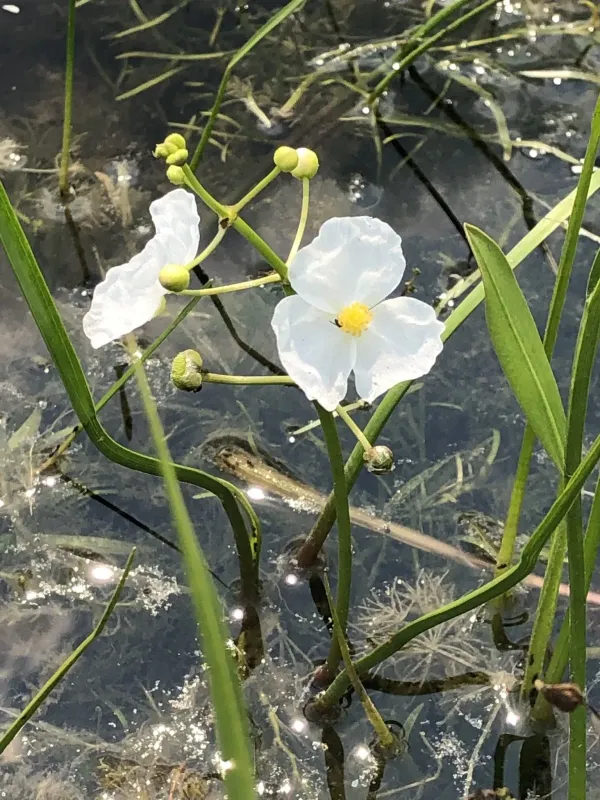
Crested arrowhead (Sagittaria cristata) belongs to the Alismataceae family. It is a perennial herbaceous aquatic plant native to freshwater habitats in North America, thriving in shallow water environments.
The plant prefers depths of 30 to 50 cm and requires nutrient-rich silt or clay substrates to flourish. Its adaptation to aquatic ecosystems makes it a unique candidate for integrated aquaculture and wetland farming.
Botanically, it features iconic arrowhead-shaped leaves that facilitate gas exchange and photosynthesis in water. The plant produces stolons that develop into starchy tubers, which are the primary focus of its agricultural cultivation.
Environmental requirements include a temperate climate with sufficient sunlight. It shows remarkable resilience to varying water temperatures, reflecting its natural range and ability to adapt to stable seasonal changes.
Commercially, it is valued for its edible tubers, which are rich in starch and nutrients. Similar to other Sagittaria species, these tubers serve as a sustainable food source when cultivated under controlled conditions.
Yield
Yields of Crested arrowhead are highly dependent on the fertility of the pond sediment and planting density. With optimized water management, producers can achieve consistent tuber production suitable for market or processing.
The biomass productivity is significant for an aquatic plant, providing a high density of food-grade tubers per square meter of water surface. Proper site selection is the key to maximizing harvest efficiency.
Main diseases and pests
Common threats include fungal root rots caused by stagnant water or poor oxygenation levels. Competition with aggressive aquatic weeds or invasive algal blooms can suppress the growth and survival of new plant colonies.
Pests, such as aquatic leaf-feeding beetles and snails, can damage foliage, reducing the plant's overall energy storage capacity. Integrated pest management strategies are necessary to protect crop health in aquatic settings.
Harvesting
Harvesting usually occurs in late autumn as the aerial parts of the plant senesce. This timing ensures that the maximum amount of energy is stored in the tubers, resulting in superior quality for harvest.
The collection process requires careful excavation of the silt to retrieve intact tubers. Following the harvest, washing and grading are essential to ensure the product meets quality standards for consumption or commercial distribution.