
Le Conte pear
Pyrus x lecontei Rehder
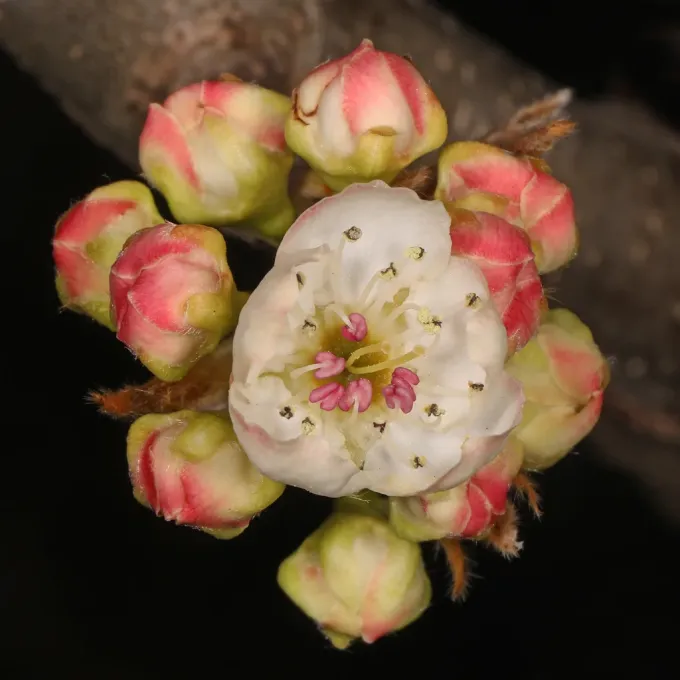
Description
Growing requirements
The Le Conte pear (Pyrus × lecontei) is a notable interspecific hybrid resulting from the cross between the European pear (Pyrus communis) and the Chinese pear (Pyrus pyrifolia). As a member of the Rosaceae family, this fruit tree is recognized for its vigorous growth habit and its specific adaptation to diverse environmental conditions.
This cultivar thrives in sunny locations with fertile, well-drained soils. It exhibits a remarkable tolerance for warmer climates, making it a preferred choice for Southern regions where other pear varieties might struggle with heat stress.
Proper spacing during planting is essential due to the tree's spreading canopy, which requires adequate airflow and space to maximize photosynthetic efficiency. The soil profile should ideally be neutral to slightly acidic, enriched with organic matter to support a robust root system.
Consistent irrigation is critical during the growing season, particularly while the fruit is developing. Care must be taken to prevent waterlogging, as excessive soil moisture can predispose the tree to root rot, making effective drainage systems a fundamental requirement for success.
Pruning is an essential part of the maintenance program for this culture. Regular thinning and shaping help manage the tree's energetic growth, ensuring that enough nutrients are allocated to fruit production rather than excessive vegetative expansion.
Yield
The Le Conte pear is highly valued for its consistent and heavy fruit production. Under optimal management practices, mature trees provide substantial yields, with fruit reaching harvest maturity in the mid-to-late season.
The fruits are characterized by a shape reminiscent of their Asian parentage, featuring crisp and juicy flesh. Their firmness makes them highly suitable for commercial shipping and handling, contributing to their popularity in regional markets.
Main diseases and pests
A primary pathological concern for the Le Conte pear is fire blight (Erwinia amylovora), a bacterial disease to which many hybrids of this lineage are susceptible. Proactive monitoring of leaves and succulent shoots is necessary throughout the growing season.
Scab infections may also occur, especially in seasons characterized by high humidity and frequent spring rainfall. Integrating fungicide applications into the seasonal schedule, particularly during budding stages, is vital for maintaining tree health and aesthetic fruit quality.
Pest management should focus on common orchard threats such as leafrollers and the codling moth. Implementing a timely integrated pest management (IPM) strategy helps mitigate damage and ensures high-quality fruit harvests at the end of the cycle.
Harvesting
Harvesting should occur when the fruits reach the correct stage of physiological maturity, indicated by the appropriate size and color development. Avoiding over-ripening on the tree is crucial to maintaining the fruit's structural integrity and storage potential.
It is recommended to pick the pears in dry weather by gently twisting the fruit so that the stem remains intact. Proper handling post-harvest prevents skin damage, which is essential to minimize the risk of storage rot and fungal infections.