
Oleaster-leaved pear
Pyrus elaeagnifolia Pall.
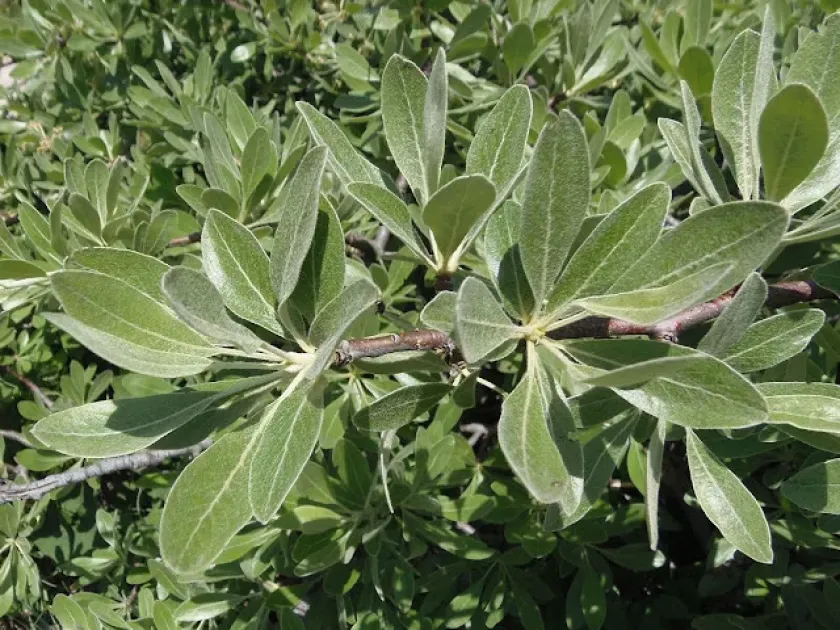
Description
Growing requirements
The oleaster-leaved pear (Pyrus elaeagnifolia) is a deciduous tree belonging to the Rosaceae family. Native to Southeastern Europe and Asia Minor, it has evolved to thrive in harsh, dry environments, particularly on rocky and calcareous slopes.
Botanically, the tree is distinct due to its lanceolate leaves covered with dense silver-grey hairs on both surfaces, giving it an appearance similar to the Russian olive (Elaeagnus). These hairs help the plant significantly reduce transpiration rates during hot summers.
The tree demonstrates exceptional drought tolerance and performs best in well-drained, nutrient-poor, or stony soils. It is highly sensitive to waterlogged conditions, which makes site selection focused on drainage a critical prerequisite for healthy growth.
It requires full sun exposure to maintain its characteristic compact, dense crown and to produce abundant white flowers in the spring. In cold climates, it shows moderate frost hardiness, making it a versatile choice for specific Mediterranean-style agricultural landscapes.
In terms of agricultural use, this species is highly valued as a rootstock for commercial pear varieties. Its ability to tolerate dry conditions makes it an indispensable tool for orchardists working in arid climates where standard rootstocks would fail to thrive.
Main diseases and pests
Pear scab (Venturia pirina) is the most common fungal disease affecting Pyrus elaeagnifolia, particularly during periods of high humidity or excessive spring rainfall. Proper aeration within the crown is necessary to manage this risk.
Insect pests, such as pear psylla and various aphid species, can infest young shoots, potentially stunting growth. Regular monitoring during the vegetative stage is recommended to apply targeted control measures when populations reach economic thresholds.
Fire blight (Erwinia amylovora) represents a severe threat to almost all members of the Rosaceae family. Strict sanitation, including the removal and destruction of infected branches and tools, is vital to contain potential outbreaks in the orchard.
For pest management, integrated pest management (IPM) strategies are preferred to preserve beneficial insect populations. Minimal chemical intervention during the bloom period is essential to protect pollinators like honey bees.
Maintaining balanced tree vigor is another defensive tactic; over-fertilization, especially with nitrogen, should be avoided as it leads to succulent growth that is more attractive to both pests and pathogens.