
Acerola
Malpighia emarginata DC.
Description
Growing requirements
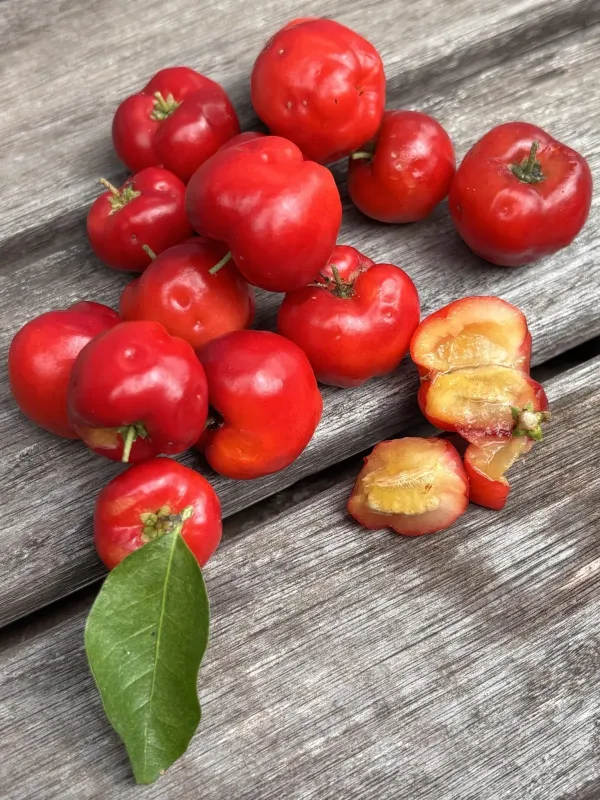
Acerola (Malpighia emarginata DC.) is an evergreen shrub or small tree belonging to the Malpighiaceae family. It is native to the tropical regions of Central and South America and the Caribbean, where it thrives in warm and humid environments.
The plant is highly sensitive to cold and requires a frost-free climate to survive. Optimal growth occurs within a temperature range of 20°C to 30°C. Prolonged exposure to temperatures below 10°C can significantly stunt development and reduce metabolic activity.
It prefers well-drained, fertile soils with a pH ranging from slightly acidic to neutral. Good soil drainage is critical, as waterlogged conditions lead to root rot and other fungal infections, which are the primary causes of plantation failure in humid regions.
Sunlight exposure is essential for the tree's health and fruit quality. Full sunlight is necessary to maximize the synthesis of ascorbic acid in the fruits. Partial shade often results in leggy growth, reduced flowering, and a decline in overall berry production.
While the tree shows some drought tolerance once established, irrigation is vital during the flowering and fruit-setting stages. Consistent moisture management ensures that the tree does not shed its blossoms, leading to a more stable and high-quality harvest yield.
Yield
Acerola is primarily cultivated for its remarkably high vitamin C content, which exceeds that of citrus fruits. The berries are mainly used in the pharmaceutical, nutraceutical, and food processing industries to create high-value health products.
The tree reaches its productive age between two and three years after planting. Yield optimization requires a balanced nutrition program, including nitrogen, phosphorus, and potassium, alongside micronutrients that support high fruit sugar and vitamin concentrations.
Post-harvest handling is the most challenging aspect of acerola production. The fruits have an extremely thin skin and are highly perishable, oxidizing quickly when exposed to air. Most commercial yields are processed immediately into frozen purees or spray-dried powders.
Mechanical pruning is employed to maintain a manageable tree size and open the canopy to sunlight. This practice not only improves fruit size and quality but also facilitates efficient manual or semi-automated harvesting processes during the peak season.
Annual yields vary significantly based on variety and environmental factors. Modern high-density planting techniques are being adopted by growers to maximize output per hectare while ensuring uniform ripening of the cherries throughout the plantation.
Main diseases and pests
The crop is vulnerable to various pests, including nematodes that target the root system, as well as scale insects, aphids, and fruit flies. These pests can cause significant economic losses if not monitored and managed through integrated pest management strategies.
Fungal diseases like anthracnose and various leaf spots are frequent issues, especially in high-humidity climates. Preventive measures include ensuring good ventilation through pruning and avoiding excessive irrigation that leads to constant leaf wetness.
Root rot caused by Phytophthora is a major threat in poorly drained soils. Maintaining proper soil health and applying biological fungicides can help control soil-borne pathogens before they cause irreversible damage to the tree's structure.
Monitoring for signs of stress is crucial for successful acerola farming. Regular field inspections allow for the early detection of localized infestations, enabling spot treatments that minimize the use of harsh chemicals and preserve the ecosystem balance.
Integrated disease management also involves the selection of resistant cultivars and the implementation of clean farming practices. By rotating crops or using cover crops to enhance soil microbiome health, farmers can naturally suppress pathogen outbreaks and increase resilience.