
Corn salad
Valerianella locusta (L.) Laterr.
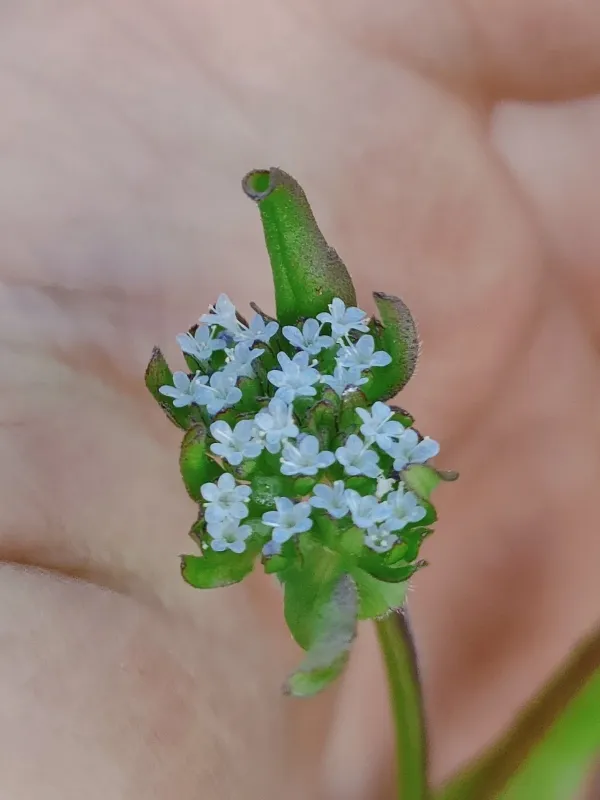
Description
Sowing dates
Corn salad (Valerianella locusta), a member of the Caprifoliaceae family, is a cold-hardy plant. The ideal sowing times are early spring, as soon as the soil warms up, or late summer for an autumn harvest.
Seeds should be sown in rows with a spacing of about 15–20 cm. The planting depth is 1–1.5 cm. The plant is capable of germinating at low temperatures, which allows for production even in cooler climates.
For a continuous supply of greens, it is recommended to sow seeds in succession every 2–3 weeks. In warmer regions, this crop is often grown as a winter annual, sown in late autumn for early spring harvest.
The seeding rate is approximately 2–3 grams per square meter. Once the seedlings emerge, it is essential to thin them out, leaving a distance of about 10 cm between plants to ensure proper rosette formation.
The crop has a short growth cycle, so strategic planning of sowing dates allows for efficient land use throughout the entire growing season.
Growing requirements
Valerianella prefers light, fertile loamy or sandy soils with a neutral pH level. The site should be well-lit, although the plant can tolerate partial shade if necessary.
The crop is highly sensitive to soil moisture. If the soil dries out, the leaves become tough, and the rosette prematurely bolts, which significantly reduces the quality of the harvest.
The optimal growth temperature is between 12 and 18 degrees Celsius. In intense heat, vegetative growth slows down, so regular watering and protection from direct sunlight are required during hot weather.
It is important to avoid waterlogging, as the root system is sensitive to excessive moisture, which can easily trigger root rot and other fungal diseases.
To improve soil fertility, well-rotted compost should be applied before sowing. Fresh manure should be avoided as it negatively affects the taste and appearance of the leaves.
Yield
The yield of corn salad depends heavily on adhering to proper agricultural practices. On average, one can expect to harvest 1 to 2 kilograms of fresh greens per square meter.
The marketable rosette forms quickly, usually within 60–80 days after germination. Careful management and timely fertilization help to increase the weight and quality of each plant.
Commercial use is focused on the fresh market. The leaves are rich in Vitamin C, provitamin A, and essential oils, making them a popular choice for high-end culinary applications.
Yield also depends on planting density. Overcrowding leads to elongated leaves and reduced biomass, so maintaining the recommended spacing is key to reaching maximum marketability.
Harvested produce has a decent shelf life if stored at low temperatures. Selecting the right cultivars allows for uniform maturity across the entire crop batch.
Main diseases and pests
The most common threats to corn salad include powdery mildew and various types of rots, which usually occur due to poor moisture management and lack of air circulation in the planting area.
Pests like flea beetles are common, as they can cause significant damage to young seedlings by feeding on their tender leaves early in the growth stage.
Slugs may also attack the crop, especially during wet weather. Control measures include regular weeding, keeping the field clean, and using authorized biological pest control agents.
To prevent the spread of diseases, it is recommended to follow a crop rotation plan and not return the crop to the same plot for at least three years to avoid pathogen buildup in the soil.
Disease prevention relies on proper soil preparation, the use of high-quality seeds, and ensuring adequate airflow between rows during the plant's development.
Harvesting
Harvesting corn salad involves cutting the entire leaf rosette at the base. This must be done before the plant begins to form a flower stalk, as bolting ruins the texture and flavor.
It is best to harvest in the morning when the leaves are turgid and contain the most moisture. After harvesting, the greens should be cooled immediately to maintain their freshness.
For commercial sale, the produce is usually packed in plastic containers or bags. Careful handling is necessary because the leaves are delicate and can easily bruise or lose their market appeal.
For home use, it is possible to harvest leaves gradually by picking only the outer ones, but this is not practiced in large-scale commercial vegetable production.
Once the harvest is complete, all plant residues must be removed from the field to keep the soil clean and reduce risks for subsequent plantings.