
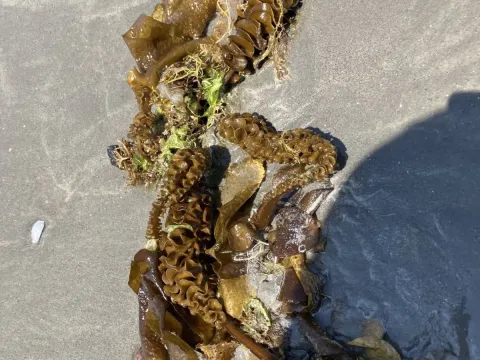
Wakame
Undaria pinnatifida (Harvey) Suringar
Wakame is an annual brown alga whose cultivation cycle is strictly tied to seasonal water temperature fluctuations. Sowing, or more accurately, the deployment of substrate seeded with germlings, typically takes place in the autumn, when water temperatures in coastal zones drop to 15–18°C.
What the section contains
Wakame
In natural settings or on marine farms, reproduction begins with the release of zoospores that settle onto ropes. In industrial settings, this process is controlled by using artificial collectors, onto which spores are pre-seeded in laboratory conditions to ensure uniform future germination.
For the successful cultivation of Undaria pinnatifida, water temperature is critical: the optimal range for active growth is between 5 and 15°C. When temperatures exceed 20°C, the crop's development slows, and the stage of natural degradation of the thallus begins.
The crop has high requirements for water quality, needing good circulation and access to nutrients like nitrogen and phosphorus. Wakame prefers areas with moderate currents, which promote efficient gas exchange and prevent sediment accumulation on the leaves.
Light intensity is a limiting factor, as intense photosynthesis is necessary for rapid biomass accumulation. Farms aim to place plantations at depths of 2 to 5 meters, where an ideal balance between water transparency and solar radiation intensity is maintained.
Wakame yield depends on the planting density on ropes and the richness of the aquatic environment in mineral components. Modern marine farms are capable of producing up to 10–15 tons of raw biomass per hectare under intensive management.
An important aspect is selective breeding, which aims to develop strains with high growth rates and increased resistance to parasites. Optimizing the depth of the net positioning also allows for an increase in product yield by 20–30% per season.
The main threats to wakame plantations are related to the growth of epiphytic organisms, such as small bryozoans or other algae that compete for light and nutrients. Additionally, herbivorous sea urchins can cause serious damage and are capable of destroying young plantings entirely.
Diseases include infections caused by pathogenic fungi and bacteria that thrive when water temperatures deviate from the norm or when plant density is excessive. Monitoring water purity and the timely removal of damaged areas are the primary control methods.
Harvesting occurs in spring or early summer, when the plant reaches its maximum size before the sporulation process begins. Delaying the harvest leads to a decrease in market quality, as the thallus becomes tough and loses its organoleptic properties.
Cut seaweed is quickly transported to the shore, where it undergoes primary processing: washing, blanching, and drying or freezing. The quality of the final product depends directly on the speed of processing, as fresh tissue is prone to rapid fermentation and pigment loss.