
Stephania glabra
Stephania glabra (Roxb.) Miers
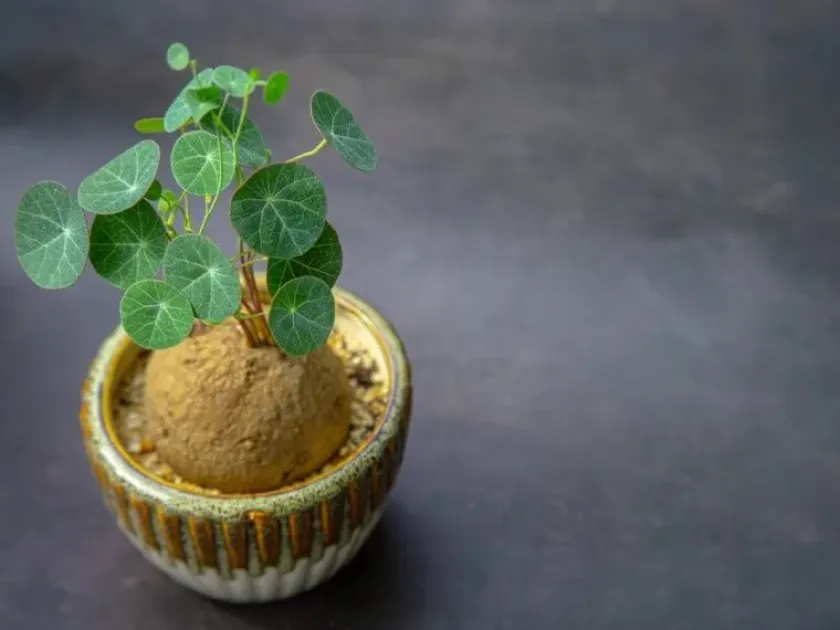
Description
Sowing dates
Propagation of the crop is most effectively achieved through seeds or vegetatively by dividing tubers to ensure high-quality planting material. Seeds require preliminary scarification and should be sown in greenhouses or nurseries in late winter to ensure optimal soil warming.
A light, well-drained substrate supplemented with leaf mold and sand is recommended for sowing, maintaining a stable temperature of approximately 20-25 degrees Celsius. It is crucial to maintain high air humidity during the germination stage while avoiding excessive moisture, which can cause the embryo to rot.
Transplanting young plants to open ground or a permanent growing site is carried out once stable warm weather arrives and the risk of frost has completely passed. The site should be sheltered from strong winds and intense direct sunlight during the afternoon hours.
Planting patterns are determined by the cultivation method: for container growing, pots of at least 5 liters are sufficient, while planting in open ground requires a spacing of at least 60-80 centimeters between plants.
Choosing the correct sowing time is critical because the plant has a long vegetation period, and late planting results in tubers that fail to gain sufficient mass before the onset of the autumn dormancy period.
Growing requirements
Stephania glabra belongs to the Menispermaceae family and naturally occurs in the subtropical forests of Southeast Asia, preferring locations with organic-rich soil and dappled light conditions.
A key requirement for successful cultivation is well-drained soil with a neutral or slightly acidic pH, as waterlogging is detrimental to the tuberous system of this species.
The crop is heat-loving, requiring temperatures in the range of 18 to 30 degrees Celsius; the plant enters deep dormancy if temperatures drop below 10 degrees.
Moisture levels play a significant role: the plant requires moderate watering during the active growth phase and nearly complete cessation of watering during the winter dormancy, when the aerial parts die back.
The plant features unique morphology, developing a massive tuber that can reach significant sizes, and long climbing vines that require sturdy supports to ensure adequate air circulation.
Yield
The economic value of Stephania lies primarily in the accumulation of active alkaloids, specifically stepharine, within its massive tuber, which is the main harvestable component.
Biomass yield depends heavily on the plant's age: peak concentrations of target compounds are reached after 3-5 years of growth, which dictates the long-term planning of commercial plantations.
With intensive agronomic practices and regular application of balanced fertilizers high in potassium and phosphorus, faster tuber growth can be achieved, increasing the production efficiency.
In greenhouse conditions, yield can be managed by regulating daylight length and applying supplementary lighting, allowing for an extended growing season of up to 9-10 months per year.
Harvesting tubers requires careful handling to avoid damaging the root system, with parts of the tuber sometimes left in the ground to regenerate the stem for the following season.
Main diseases and pests
Stephania glabra is susceptible to fungal diseases such as root rot and late blight, which develop under conditions of excessive soil moisture combined with poor ventilation.
Regarding pests, spider mites and mealybugs pose the greatest threat to the aerial parts, as they thrive in the low humidity conditions often found in greenhouses.
To prevent pest infestations, it is necessary to conduct prophylactic treatments with bio-insecticides and monitor the leaves, where insect colonies may appear.
Disease management includes strict control of watering regimes, the use of sterile substrates during sowing, and timely disposal of infected plant fragments.
- Maintain spacing between plants for proper ventilation.
- Ensure high-quality drainage in containers.
- Restrict nitrogen fertilizer application toward the end of the season.
- Regularly disinfect tools after use.
- Monitor leaf surfaces frequently for parasite colonization.
Harvesting
Tuber harvesting is performed after the complete natural wilting of the aerial parts, which signals that the plant has stored sufficient nutrients and has finished its vegetation cycle.
Tubers are carefully extracted from the soil, cleaned of debris, and washed with running water before being processed or dried in well-ventilated areas.
Drying of the raw material must be conducted at a controlled temperature not exceeding 45 degrees Celsius to preserve the biological activity of the alkaloids and prevent degradation.
For long-term storage, dried tuber segments are packed in airtight containers protected from moisture and direct light, preventing the spoilage of valuable raw materials.
The harvesting process requires manual labor because the fragile structure of young shoots and the specific shape of the tubers make it difficult to use heavy machinery without risking product damage.