
Cauliflower fungus
Sparassis crispa Wulf.: Fr.
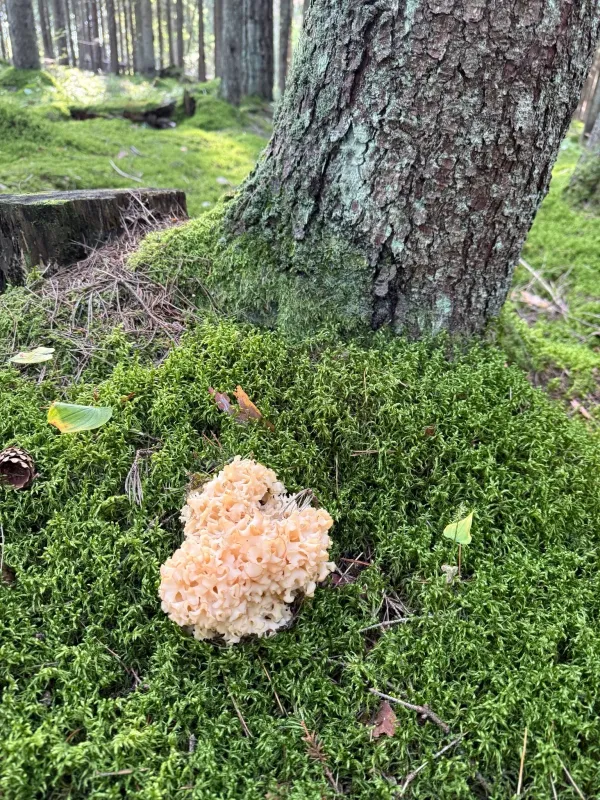
Description
Sowing dates
Sparassis crispa, commonly known as the cauliflower fungus, is a parasitic and saprotrophic mushroom belonging to the Sparassidaceae family. In cultivation, it is propagated using mycelium grown on wood-based substrates.
The cultivation process begins with the inoculation of specialized substrate blocks, typically composed of coniferous sawdust supplemented with grain bran or nutrients.
Spring and autumn are considered the best seasons for starting the inoculation process as they allow for better control over the temperature inside the growing facility.
The colonization of the substrate by the mycelium is a slow process, often requiring 3 to 5 months of incubation in a dark, temperature-controlled environment.
Strict hygiene standards must be maintained during the preparation of the substrate to prevent contamination by faster-growing competitive fungi or bacteria.
Growing requirements
The fungus thrives on coniferous wood substrates, which mimics its natural habitat of decaying roots and stumps of pine and spruce trees.
Optimal vegetative growth occurs at temperatures between 20–24°C, but the initiation of fruit body formation requires a thermal shift to 12–16°C.
High relative humidity, maintained around 85–90% via automated misting systems, is crucial for the development of the delicate, frond-like structures.
Unlike many other fungi, Sparassis crispa requires diffused light during the fruiting stage to develop its characteristic appearance and healthy pigmentation.
Proper ventilation is essential to maintain low CO2 levels; otherwise, the mushroom structures may deform or stop growing prematurely due to gas accumulation.
Yield
Sparassis crispa is not a highly productive species compared to common mushrooms, which contributes to its status as a specialty, high-value crop.
Under controlled conditions, a grower can expect approximately 300 to 600 grams of fresh mushrooms from a standard 3 kg substrate block.
Biological efficiency remains relatively low, which necessitates continuous research into more productive strains and optimized substrate formulas.
Fruiting typically occurs in a single flush, making the replacement of exhausted substrate blocks a necessary part of the production cycle for the next batch.
Improving yield involves selecting aggressive mycelial strains and providing precise environmental conditions during the critical transition to fruiting.
Main diseases and pests
Green mold, primarily species of Trichoderma, is the most significant threat, capable of outcompeting the Sparassis mycelium during the incubation stage.
Fungus gnats and sciarid flies pose a constant danger, damaging the fruiting bodies and serving as vectors for various bacterial and fungal pathogens.
Bacterial rot can quickly destroy the crop if excessive moisture settles on the mushroom's convoluted surfaces, especially in poorly ventilated chambers.
Mites can also infest the developing fruit bodies, necessitating the use of high-efficiency particulate air (HEPA) filters in the ventilation system.
- Regular disinfection of all growing surfaces.
- Use of high-quality, laboratory-certified spawn.
- Monitoring of air quality and temperature fluctuations.
Harvesting
Harvesting is performed when the fruit body reaches its peak size, but before the edges of the fronds begin to darken, which indicates sporulation.
The mushrooms are harvested by cutting them at the base with a clean knife, taking care to minimize contact with the substrate to ensure cleanliness.
Due to the intricate, convoluted structure of the mushroom, cleaning is labor-intensive, often requiring manual removal of any residual substrate or debris.
The cauliflower fungus has a relatively short shelf life, requiring immediate cooling and packaging to maintain its delicate texture and fresh quality.
For market distribution, mushrooms should be stored in ventilated containers to prevent the accumulation of moisture, which leads to rapid decay.