
Sparassis latifolia
Sparassis latifolia Y.C. Dai & Zheng Wang
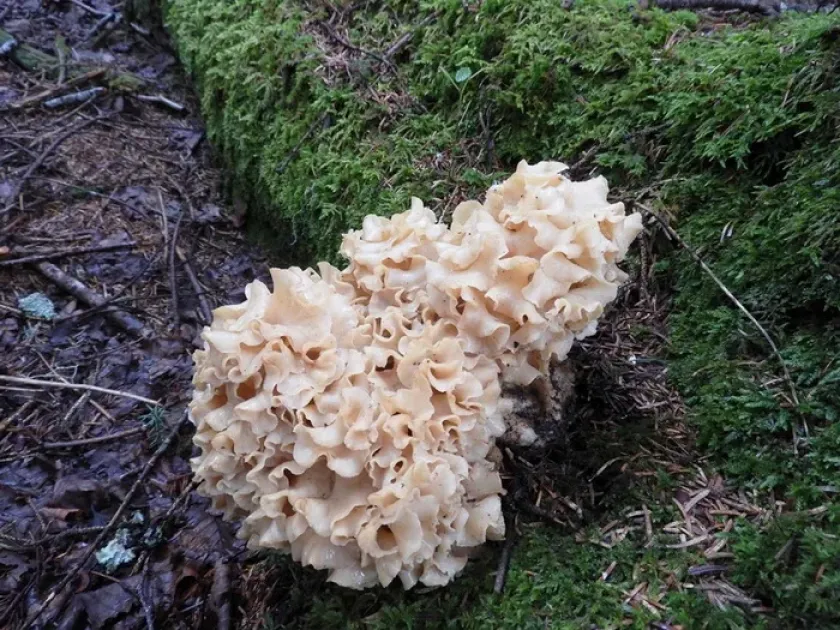
Description
Sowing dates
The inoculation of the substrate for Sparassis latifolia cultivation is carried out primarily in controlled indoor environments. The substrate typically consists of a mixture of sawdust from hardwood species, supplemented with bran and calcium additives to adjust the pH balance.
The mycelium of this species is known for its slow growth rate, meaning that the colonization of substrate blocks takes significantly longer compared to more common species like oyster or button mushrooms. The optimal incubation period ranges from 40 to 60 days.
Once the mycelium has fully colonized the substrate, the blocks are moved to the fruiting chamber. It is essential to maintain stable air humidity, as any drying of the surface can halt the development of the fruiting bodies.
Experienced growers recommend performing the inoculation under strictly sterile conditions to minimize the risk of contamination by competitive mold fungi. In commercial production, the use of bags with high-quality air filters is the preferred method.
Scaling production requires adherence to precise cycles. Proper planning of the inoculation schedule allows for consistent harvesting throughout the entire production season.
Growing requirements
Sparassis latifolia prefers moderate temperatures, ideally between 15 and 20 degrees Celsius during the active fruiting phase. Significant temperature fluctuations can negatively affect the formation of the mushroom's distinct structure.
A high level of air humidity, around 85–90%, is necessary for the development of healthy fruiting bodies. Simultaneously, an efficient ventilation system is critical to ensure a steady supply of fresh oxygen.
The culture requires diffused light to develop properly. Direct sunlight should be avoided as it may cause overheating, leading to deformation of the fruiting bodies and a decline in product quality.
The composition of the substrate is vital; using wood from specific broadleaf trees mimics the natural habitat of this wood-decay fungus. A balanced carbon-to-nitrogen ratio is essential for achieving high yields.
As the fungus grows, it releases specific metabolites, making consistent airflow mandatory. Excessive accumulation of carbon dioxide can lead to the elongation of the fruiting bodies and the loss of their natural, cauliflower-like appearance.
Yield
The yield of Sparassis latifolia depends heavily on the density of the substrate and the strict adherence to cultivation parameters. Under industrial conditions, the output is typically 15–25% of the wet substrate weight.
The first flush of fruiting usually produces the largest and highest-quality specimens. Subsequent flushes are often less productive, which is why growers often focus on maximizing the first harvest cycle.
A single fruiting body can weigh several kilograms under ideal growth conditions. Large specimens are highly valued in the gourmet food market for their aesthetic appeal and impressive size.
Continuous monitoring of the growth blocks allows for the identification of high-performing strains, which serves as a foundation for improving yield metrics in future production cycles.
Optimizing lighting in the growing chamber can lead to lighter-colored fruiting bodies, which are considered the industry standard. In this market, the visual quality of the mushroom often dictates its retail value.
Main diseases and pests
The primary threat during cultivation is competitive mold, such as Trichoderma, which can completely destroy the mycelium during the incubation stage.
Bacterial infections can cause rot in the fruiting bodies under conditions of excessive humidity and poor air circulation. This is often indicated by the darkening of the edges and an unpleasant odor.
Pests, such as mushroom flies and mites, can enter facilities with low levels of protection. They damage both the mycelium and the developing mushrooms, reducing their marketability.
The best strategy for disease control involves preventive disinfection of the premises and ensuring the cleanliness of all tools. Chemical fungicides are rarely used due to the short growth cycle of the mushroom.
Biological protection, utilizing safe products based on entomopathogenic microorganisms, shows high effectiveness in controlling insect pests without harming the fungal culture.
Harvesting
Harvesting is performed when the fruiting body reaches its maximum size but before the edges of the "leaves" lose their firmness and begin to darken. Overripe mushrooms become tough and lose their culinary appeal.
A sharp, disinfected knife should be used for harvesting. The cut should be made as close to the base as possible to avoid leaving residues that could become a source of infection on the substrate block.
Harvested mushrooms require careful handling due to their fragile structure. Using containers with soft padding is recommended for safe transport to the market.
After harvesting, the mushrooms are cleaned of substrate debris. It is important to minimize contact with water, as excess moisture negatively impacts the shelf life of the fresh product.
Immediately after harvest, the mushrooms should be sent for sale or refrigerated for processing, as they have a high metabolic rate and lose freshness quickly at room temperature.