
Narrow-leaved watercress
Nasturtium microphyllum Boenn. ex Rchb.
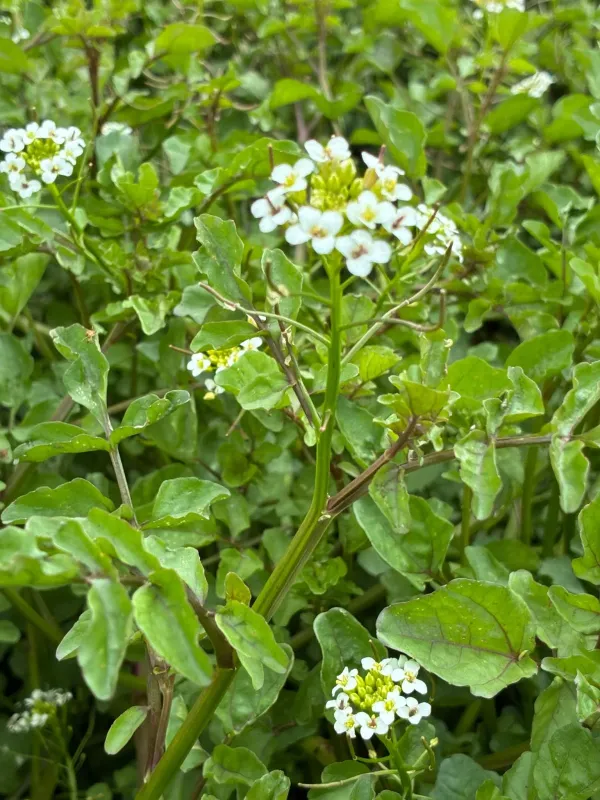
Description
Sowing dates
Narrow-leaved watercress (Nasturtium microphyllum) is a perennial aquatic plant belonging to the Brassicaceae family, widely known for its nutritional value.
Cultivation is primarily achieved through stem cuttings, which allow for rapid establishment and consistent crop quality in a production environment.
Seeds can also be used for initial propagation; they are sown in shallow, moist trays or hydroponic starting beds during the spring season.
When using cuttings, segments of about 10–15 cm are placed directly into shallow streams or water-circulating systems where they quickly develop roots.
Optimal spacing is essential to ensure adequate airflow, preventing moisture-related issues during the rapid growth phase of the plant.
Growing requirements
Watercress thrives in cool, running water with high oxygen content and low mineral buildup to ensure healthy, vibrant leaves.
The ideal temperature range for this crop is between 10°C and 20°C; extreme heat often leads to bolting and a bitter flavor in the foliage.
The plant requires a neutral to slightly alkaline pH, which facilitates the efficient uptake of nutrients from the aquatic environment.
Partial shade is often necessary in warmer climates, as direct, intense sunlight can stress the plant and cause leaf tip burn.
Maintenance involves regular cleaning of the water delivery channels to prevent the accumulation of sediments and promote constant water flow.
Yield
The yield of narrow-leaved watercress depends heavily on the consistency of the hydroponic system and the health of the parent stock used for cuttings.
In well-managed systems, producers can achieve multiple harvests per season, with yields ranging from 1.5 to 2.5 kg per square meter per harvest.
Regular harvesting of the apical shoots promotes denser growth and bushier plants, significantly increasing the total output over time.
Productivity remains stable throughout the growing season, provided that nutrients are properly supplied and temperatures are monitored closely.
Rejuvenation of the planting beds is recommended every few cycles to maintain plant vigor and prevent the accumulation of root-bound biomass.
Main diseases and pests
Crucifer flea beetles are the most significant pest for this crop, often causing extensive damage to the foliage in a very short time frame.
Root rot, often caused by pathogens like Pythium, can devastate plantations if water circulation is stagnant or the oxygen level drops.
Aphids tend to congregate on the undersides of leaves, requiring vigilant monitoring and integrated pest management strategies.
White blister rust and various fungal leaf spot diseases may appear when humidity is excessively high and ventilation is poor.
- Use fine mesh netting to exclude insects without relying on chemical pesticides.
- Ensure constant water turnover to minimize the risk of soil-borne or water-borne pathogens.
Harvesting
Harvesting is performed by carefully cutting the stems with sharp, sanitized tools just above the lower leaf nodes to encourage re-growth.
It is best to harvest early in the morning when the plants are fully turgid to ensure maximum shelf life and crispness of the final product.
Immediately after harvest, the greens should be rinsed in chilled, clean water to remove any debris and lower the field heat of the crop.
Packaging should allow for slight aeration while maintaining moisture, typically using high-quality produce bags or clamshells with perforations.
Proper harvest intervals range from two to three weeks depending on the temperature, allowing the plants sufficient time to recover and regrow.