
Gynandropsis gynandra
Gynandropsis gynandra (L.) Briq.
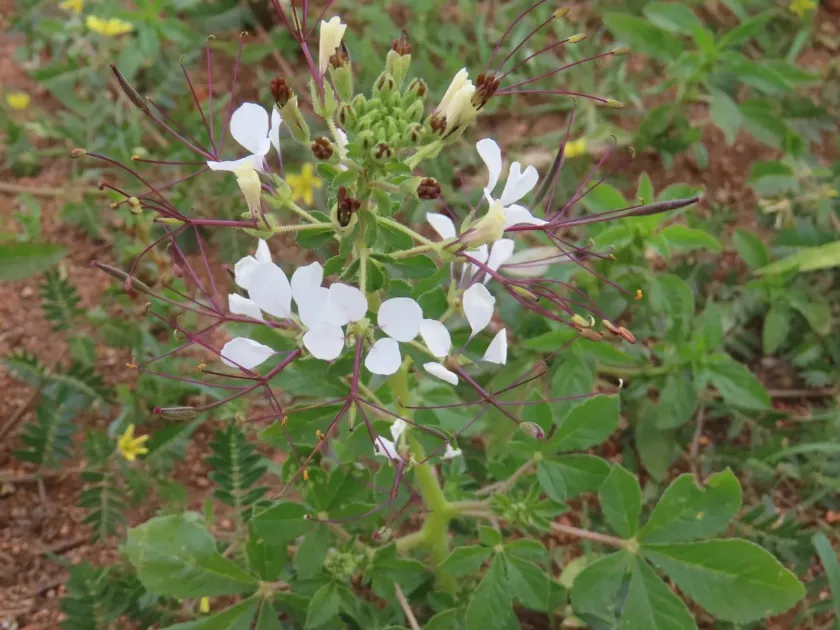
Description
Sowing dates
Gynandropsis gynandra is a warm-season annual crop that requires stable, high temperatures to germinate and establish successfully in the field.
Sowing should take place only after the soil has warmed up, ideally when temperatures consistently stay above 20 degrees Celsius during the day.
Seeds should be sown at a shallow depth of approximately 1 to 2 centimeters to ensure effective germination and to prevent rot in heavy soil conditions.
Row planting is recommended for better weed management and to ensure adequate air circulation between individual plants during the intensive growth stage.
Farmers often use direct seeding, though starting seedlings in nurseries can be beneficial in regions with a limited or unstable growing season.
Growing requirements
Belonging to the Capparaceae (or Cleomaceae) family, this plant thrives under full sunlight and is highly adapted to tropical and subtropical climates.
It prefers fertile, well-drained loamy soils with a pH level between 5.5 and 7.0 to facilitate optimal nutrient uptake and root development.
While known for its drought tolerance, consistent moisture is necessary to maintain the tenderness and quality of the leaves intended for culinary use.
The plant grows vigorously in temperatures ranging from 25 to 30 degrees Celsius; exposure to cold weather leads to stunted growth and leaf chlorosis.
Agricultural use centers on the harvest of young, tender leaves, which are consumed as a nutritious green vegetable and a traditional medicinal plant.
Main diseases and pests
Aphids are the most common pests affecting this crop, often clustering on the underside of leaves and causing them to curl or lose vitality.
Fungal diseases, including powdery mildew and various leaf spot pathogens, can impact yield if plant density is too high or humidity remains excessive.
Effective management includes keeping fields free of weeds that may host pests and ensuring that plants have adequate space for airflow between rows.
If chemical interventions are needed, integrated pest management strategies should be prioritized to maintain the safety of the vegetable crop.
Regular crop rotation is highly recommended to break the life cycles of soil-borne pathogens that commonly affect species within this family.
Harvesting
Harvesting usually begins 3 to 4 weeks after emergence, focusing on young leaves and succulent shoots before the plant enters the flowering phase.
Continuous harvesting of the apical buds encourages branching, which significantly increases the total weight of the edible yield throughout the season.
For seed production, selected plants should be left to mature until the seed pods become dry and change color to light brown or yellow.
The vegetable is highly perishable, and it is recommended to harvest during cool morning hours to maximize its freshness and shelf life post-harvest.
Proper post-harvest handling involves keeping the leaves in a cool, shaded environment to prevent dehydration and maintain the high nutrient content.