
Auricularia nigricans
Auricularia nigricans (Sw.) Birkebak, Looney & Sánchez-García
Description
Growing requirements
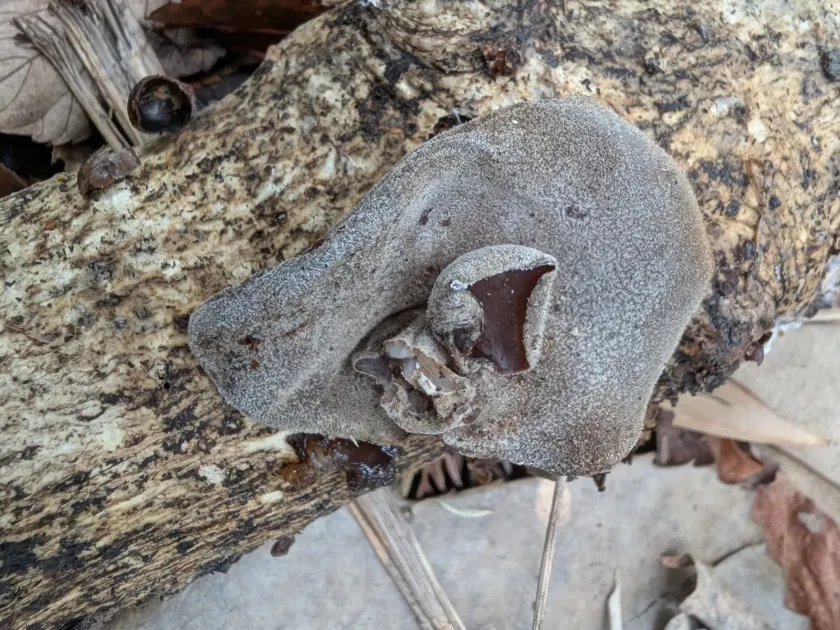
Auricularia nigricans is a species of fungus in the Auriculariaceae family. As a wood-decaying (xylotrophic) fungus, it naturally grows on the deadwood of deciduous trees in humid, tropical, and subtropical forest ecosystems worldwide.
Successful cultivation requires a climate-controlled environment with a relative humidity level of 80–90%. Mycelial colonization is most effective at temperatures between +22 °C and +26 °C, while the fruiting stage requires a drop to +18...+22 °C to trigger development.
The substrate typically consists of hardwood sawdust enriched with organic nitrogen sources like rice bran, wheat bran, or corn flour. Sterilization of this medium is essential to ensure that the mushroom mycelium can establish itself without interference from weeds or mold.
Proper aeration is vital during the fruiting phase, as this mushroom is sensitive to CO2 buildup. Moderate light levels are necessary to encourage the development of dark, well-formed fruiting bodies that meet commercial market standards.
The maintenance of strict hygienic protocols in the growing room is the foundation of high productivity. Any compromise in air quality or cleanliness can lead to the rapid onset of bacterial or fungal contamination, jeopardizing the entire batch.
Yield
When using professional cultivation techniques, growers can achieve significant yields, often reaching 25–35% of the substrate's wet weight. The consistency of the yield depends largely on the strain selection and the precise management of the substrate-to-nitrogen ratio.
The life cycle from inoculation to the first harvest typically spans 45 to 60 days. With sequential management of the fruiting environment, growers can achieve multiple harvest waves from a single substrate block, optimizing profit margins.
Auricularia nigricans is highly valued for its unique culinary properties, including a firm, cartilage-like texture that remains satisfying even after extensive cooking. It is a staple ingredient in many Asian cuisines and is highly sought after for its absorption of flavors.
Beyond culinary use, the mushroom is increasingly recognized in the nutraceutical industry for its polysaccharide content, which is researched for potential anti-inflammatory and blood-thinning properties.
The global demand for high-quality wood ear mushrooms provides a stable economic incentive for farmers, especially as the market for health-conscious food products continues to grow steadily across different regions.
Main diseases and pests
Common pests, including sciarid flies and phorid flies, are major threats to the mycelium. These insects damage the inner structure of the substrate blocks and act as vectors for various pathogens that can ruin the crop before it even fruits.
Trichoderma and other green molds are the primary diseases encountered during the incubation stage. If the substrate is not properly pasteurized or if the environment is too humid without sufficient airflow, these molds will outcompete the fungus.
Bacterial blotch, caused by Pseudomonas, can lead to slimy, darkened, and unmarketable fruiting bodies. This is primarily a result of excessive surface moisture and poor ventilation within the fruiting chambers.
- Rigorous sterilization of substrate materials.
- Implementation of fine-mesh screening for insect exclusion.
- Precise control of climate parameters.
- Consistent sanitation of all tools and surfaces.
Integrated pest management, including the use of biological control agents, helps maintain a clean growing environment while minimizing the reliance on synthetic chemicals, ensuring high product quality.
Harvesting
Harvesting should occur when the fruiting bodies have reached their full size but before the edges become thin or start to curl excessively. Timely harvesting is critical to maintain the desirable texture and visual appeal of the mushroom.
Each mushroom is hand-picked by gently twisting or cutting at the base. Care must be taken to minimize damage to the substrate block surface, which allows for healthier subsequent growth flushes and prolongs the production window.
Freshly harvested mushrooms require rapid chilling to +2...+4 °C to maintain shelf life. For commercial distribution, they are often dried in controlled dehydrators at low temperatures to preserve their nutritional profile and structural integrity.
Proper sorting by size during the harvesting process adds value to the product, allowing for standardized packaging that appeals to both premium restaurant buyers and retail consumers.
Minimal post-harvest cleaning is required, provided that the growing environment is kept free of dust and debris, which simplifies the supply chain and reduces labor costs during the final packaging stage.