
Auricularia cornea
Auricularia cornea Ehrenb.
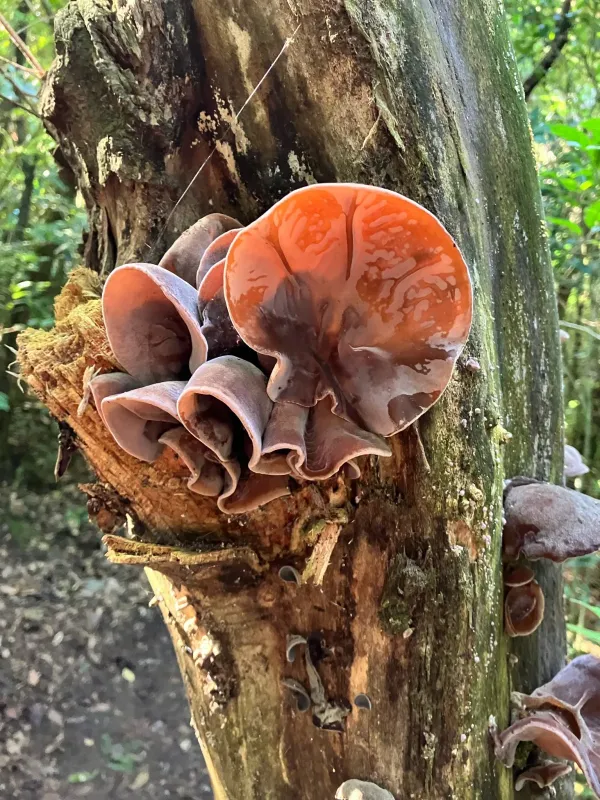
Description
Sowing dates
Auricularia cornea is a tropical species that requires careful climate control for year-round production. The cultivation process begins with the inoculation of substrate blocks, which must be performed under strict sterile conditions to ensure the purity of the fungal culture.
Once inoculated, the substrate bags are kept in an incubation room where temperatures are maintained between 25°C and 28°C. This phase allows the mycelium to fully colonize the substrate, which typically takes between 3 to 5 weeks depending on the strain's vigor.
Transitioning the blocks to the fruiting chamber involves a controlled decrease in temperature to trigger the formation of primordia. Proper aeration during this stage is essential, as the accumulating CO2 levels from the mycelial activity can inhibit the development of healthy mushrooms.
Daily maintenance includes monitoring the humidity levels, which must remain near 90–95% to prevent the young mushrooms from drying out. A slight reduction in temperature and an increase in light exposure are standard protocols to stimulate the growth of dense, healthy fruit bodies.
The entire growing cycle is planned as a continuous process, with new batches introduced to the fruiting chambers every 7 to 10 days. This schedule ensures a consistent supply of fresh produce for the market while maximizing the efficiency of the facility's climate control systems.
Growing requirements
Auricularia cornea belongs to the family Auriculariaceae and is a saprotrophic fungus that thrives on decaying wood in its native tropical environment. Its primary biological function is the decomposition of cellulose and lignin, which dictates the types of substrates used in industrial farming.
For commercial cultivation, a substrate based on hardwood sawdust is preferred, often supplemented with bran or soy flour to boost nitrogen content. The mix must be carefully balanced to provide the necessary nutrients without encouraging the growth of competing mold species.
The moisture content of the substrate should be kept at around 60–65%. In the fruiting room, high relative humidity is the most critical environmental factor; it ensures that the jelly-like fruit bodies maintain their structural integrity and characteristic texture.
Ventilation systems must provide at least 4–6 air changes per hour to remove excess carbon dioxide and moisture. This airflow is necessary to keep the mushrooms firm and prevent the development of bacterial infections that often thrive in stagnant, humid air.
Light levels are crucial for the development of the mushrooms' pigmentation and overall morphology. A light intensity of 500–1000 lux for 8–12 hours a day is recommended, as inadequate lighting results in pale, deformed fruit bodies with lower market value.
Yield
High yields for Auricularia cornea are achievable through precise management of the substrate-to-mycelium ratio and optimal environment control. On average, growers can expect 200 to 350 grams of fresh mushrooms per kilogram of wet substrate throughout all harvesting waves.
The biological efficiency of this species usually ranges from 60% to 80%, depending on the supplement levels and the quality of the spawn. Typically, the production cycle allows for three distinct harvesting waves, providing a steady output of mushrooms over several weeks.
To maximize yields, it is important to provide a resting period between harvest waves. During this interval, the mycelium recharges, and the substrate block is allowed to recover, which is vital for maintaining the productivity of the second and third harvest stages.
The first harvest wave is generally the most significant, accounting for over half of the total yield. Subsequent waves may produce smaller mushrooms, but they remain highly valued for their high nutritional quality and dense structure, which is ideal for food processing.
Data tracking and optimization of the substrate recipe are common practices among successful growers. By adjusting the concentration of nitrogen additives and monitoring environmental data, producers can consistently reach or exceed these average yield figures.
Main diseases and pests
The primary threat to Auricularia cornea cultivation is competition from other fungi, particularly Trichoderma and Aspergillus species. These molds often infect the substrate during the incubation phase if the sterilization process is not performed correctly, leading to total crop loss.
Bacterial pathogens, such as Pseudomonas, can cause "wet rot," a condition that turns the mushrooms dark, slimy, and soft. This usually occurs when the humidity is too high and ventilation is poor, creating a film of water on the surface of the fruit bodies.
Pests like sciarid flies and mites are common in mushroom houses. Their larvae feed on the mycelium and the fruit bodies, causing significant structural damage and serving as vectors for various bacterial and viral diseases that further weaken the culture.
Prevention is the main defense against these threats, relying on rigorous sanitation, air filtration, and the exclusion of pests from the fruiting area. The use of chemical fungicides is generally avoided to maintain the organic standards and safety of the produce.
Regular disinfection of the growth facility after each production cycle is mandatory to break the life cycles of pests and pathogens. Keeping a clean working environment is the most effective way to ensure long-term sustainability in mushroom farming.
Harvesting
The harvest should occur when the fruit bodies are fully expanded but before they begin to release spores. Harvesting at the peak of maturity ensures the best combination of weight, texture, and visual appeal, which are essential for quality control.
Mushrooms should be cut at the base with a clean, sharp knife. Removing the entire base is crucial because any leftover tissue will begin to decay, attracting bacteria and potential disease that could compromise the health of the entire substrate block.
Post-harvest, the mushrooms must be cooled immediately to 2–4°C to preserve their freshness. Auricularia cornea is remarkably hardy and can be dried for long-term storage, as it retains its nutritional value and can be reconstituted with water later.
Sorting should be carried out immediately after harvest to separate premium quality mushrooms for the fresh market from smaller or damaged ones. Those not suitable for fresh sale are usually diverted to drying facilities to be converted into high-demand mushroom powder.
Packaging should be designed to allow for gas exchange to prevent moisture buildup inside the containers. When stored correctly in a cool, ventilated environment, the harvested mushrooms maintain their market quality for approximately 7 to 10 days.