
Field Elm
Ulmus minor Mill.
Description
Sowing dates
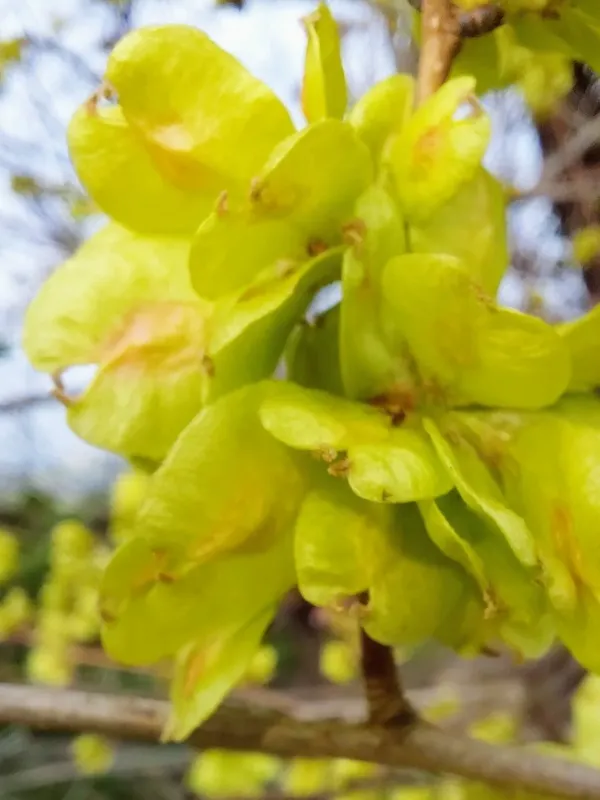
The sowing of Field Elm seeds in nurseries is typically performed immediately after their maturation in late spring or early summer, as they quickly lose their viability. The optimal time is when the samaras acquire a brownish hue.
Before sowing, the seeds are often cleaned of the pericarp to increase germination energy. Sowing is carried out in rows with a spacing of about 20–25 centimeters, which facilitates subsequent seedling care.
The planting depth in light soils should not exceed 1–1.5 centimeters. It is recommended to mulch the surface of the seedbeds with a layer of peat or humus to prevent the topsoil from drying out.
Seedlings emerge uniformly within 1–2 weeks, provided there is sufficient moisture. During the first year, seedlings require regular watering and weeding, as they are highly sensitive to competition.
Transplanting seedlings to their permanent location (forestry plots or parks) is primarily done in early spring before sap flow begins or in autumn during leaf fall.
Growing requirements
The Field Elm belongs to the Ulmaceae family and is characterized by its high ecological plasticity. This tree prefers deep, fertile, moderately moist soils but can withstand short-term flooding by river floodplains.
The plant is light-loving, although it can tolerate light shade when young. Mature specimens develop a powerful root system, allowing them to effectively explore deep soil horizons.
Climatically, the Field Elm favors regions with mild and moderately warm weather. It possesses sufficient drought resistance compared to other members of the Ulmus genus, making it promising for afforestation in steppe zones.
The tree responds well to organic fertilizers at a young age. An important requirement is protection from desiccating winds during the first years after planting, which can be achieved through windbreak rows.
The Field Elm tolerates pruning remarkably well, which leads to its widespread use in landscape design for creating hedges and shaped alleys.
Main diseases and pests
The primary biological threat to the Field Elm is Dutch elm disease (DED), caused by the fungus Ophiostoma novo-ulmi. This vascular disease leads to the blockage of conductive vessels and the rapid death of the tree.
Pests such as the elm leaf beetle and various species of bark beetles cause significant damage to foliage and bark. Bark beetles are the main vectors of the pathogen spores that cause DED.
To prevent the spread of diseases, sanitary felling must be conducted, with infected trees removed and disposed of promptly. This helps to reduce the population of insect vectors.
Chemical control includes the application of systemic fungicides during the active growing season and insecticides against leaf-eating pests. However, complete protection against DED is difficult due to the cryptic nature of the fungus.
Breeding resistant clones is the only long-term solution to the pathogen problem. It is crucial to monitor the general phytosanitary status of plantations and avoid mechanical damage to the trunks.