
Beaked stewartia
Stewartia rostrata Spongberg
Description
Growing requirements
Beaked stewartia (Stewartia rostrata) is a remarkable deciduous tree belonging to the Theaceae family. Native to the mountainous forests of Eastern China, it is highly valued by horticulturists for its elegant growth habit and attractive exfoliating bark.
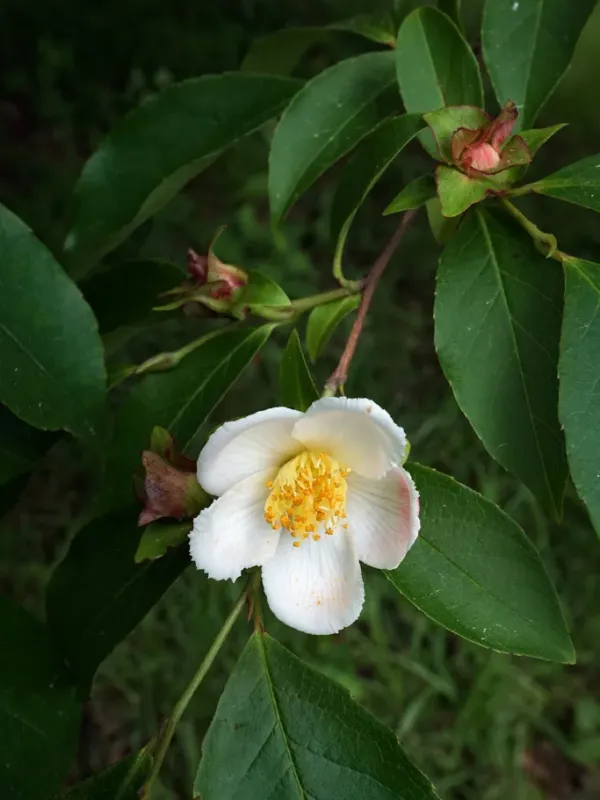
Botanically, the species is known for its beautiful, cup-shaped white flowers with prominent stamens. The foliage is equally ornamental, often turning brilliant shades of red and purple in autumn, making it a spectacular focal point in a shaded landscape design.
Successful cultivation requires specific environmental conditions. The plant thrives in acidic, well-drained, humus-rich soil. It is intolerant of heavy, compacted clay or waterlogged ground, which can cause severe stress to its delicate root system.
The ideal planting site should provide partial shade, especially in the afternoon. Harsh, direct sunlight can scorch the leaves, while exposure to strong winds can dehydrate the plant. It is essential to choose a location that offers protection and consistent moisture.
Maintenance involves regular irrigation, particularly during dry spells. Mulching with organic matter, such as pine bark or peat, is recommended to regulate soil temperature and help maintain the acidity levels required for optimal plant health.
Main diseases and pests
Beaked stewartia is generally free from major pests and diseases when grown under suitable conditions. Its primary health issues are almost exclusively related to poor soil management or improper site selection rather than external pathogens.
The most common threat is root rot caused by stagnant water. When the soil lacks proper drainage, the roots fail to breathe, leading to rapid decline. Ensuring the planting site is elevated or properly amended is the most effective way to prevent this problem.
While the tree is hardy, young plants can be susceptible to damage from late spring frosts, which can destroy new growth and flower buds. Protective coverings are advised in climates where late frost events are historically frequent.
Scale insects may occasionally appear on the branches, though they rarely cause significant long-term damage if identified early. Horticultural oils or insecticidal soaps can be used to manage infestations without harming the tree's health.
Good air circulation is vital for maintaining a healthy specimen. Regular pruning of dead or crossing branches not only improves the tree's aesthetic shape but also significantly reduces the risk of fungal spores accumulating within the dense canopy.