
Japanese Stewartia
Stewartia pseudocamellia Maxim.
Description
Growing requirements
The Japanese Stewartia (Stewartia pseudocamellia) is a magnificent ornamental tree belonging to the Theaceae family. It is native to the forests of Japan and the Korean Peninsula, valued globally for its seasonal beauty and refined appearance.
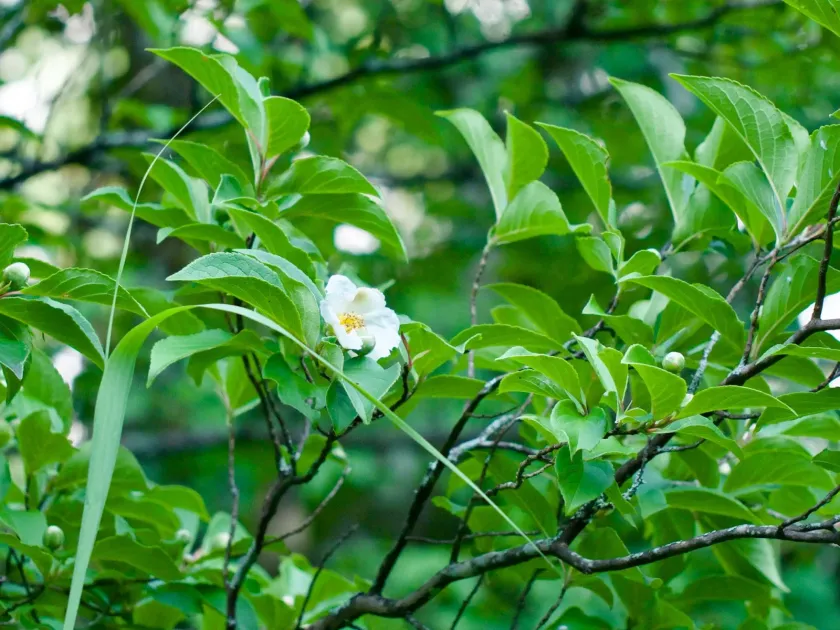
Botanically, this species is distinguished by its stunning, exfoliating bark which reveals shades of tan, gray, and reddish-brown. The tree produces cup-shaped white flowers with orange-yellow anthers, creating a striking contrast against the dark green summer foliage.
Successful cultivation requires soil that is rich in organic matter, acidic, and well-drained. Similar to other members of the Camellia family, the Japanese Stewartia struggles in heavy, compacted soils that do not allow for adequate root respiration.
Climate preferences lean toward temperate zones with protected locations. While the tree can tolerate full sun in cooler climates, it generally performs best in partial shade, especially during the hottest hours of the day to protect its foliage.
Agricultural management involves deep watering during dry spells and consistent mulching. Mulch helps regulate soil temperature and retains the moisture level that the tree's surface-feeding roots require to thrive.
Main diseases and pests
Japanese Stewartia is generally considered a low-maintenance tree with few significant pest or disease issues. However, poor drainage remains the primary threat, leading to root rot and eventual plant decline.
In humid and stagnant air environments, fungal leaf spots may occasionally occur. Improving air circulation by correctly spacing the plants and pruning congested branches is the best preventative measure.
Pests like aphids or scale insects may occasionally inhabit the foliage. These can typically be managed through manual removal or the application of horticultural soaps if an infestation occurs.
Soil pH levels must be monitored carefully. If the environment becomes too alkaline, the plant will likely develop iron chlorosis, characterized by yellowing leaves with green veins, which requires iron chelate treatment.
Winter damage is mostly a concern for young specimens in colder hardiness zones. Providing wind protection and insulating the root zone with thick mulch during the first few years is highly recommended.