
Chinese Stewartia
Stewartia sinensis
Description
Growing requirements
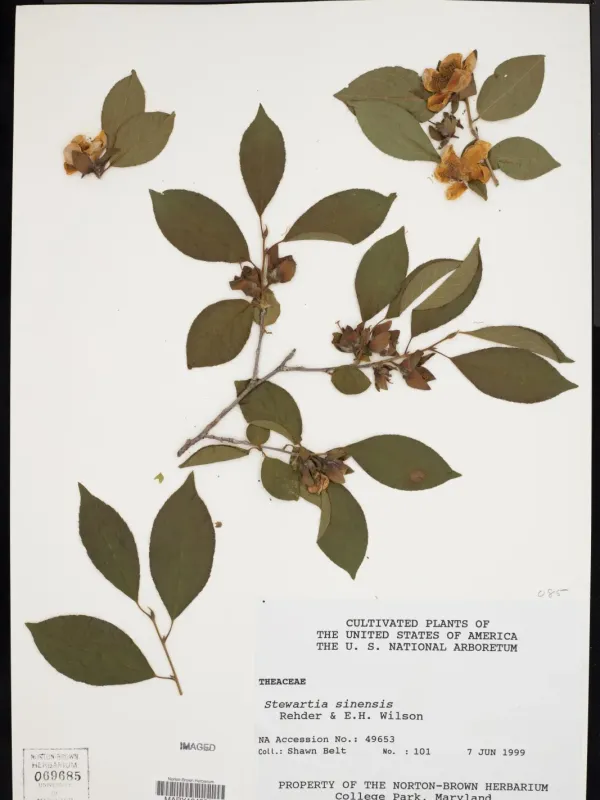
Chinese Stewartia (Stewartia sinensis) is a deciduous tree belonging to the Theaceae family. It is highly prized in horticulture for its beautiful exfoliating bark, which peels in patches to reveal smooth, colorful layers beneath.
Native to the forests of Central and Western China, the species thrives in moist, well-drained, acidic to neutral soils. It requires rich organic matter and does not tolerate waterlogging, making proper drainage an essential part of soil preparation.
The tree prefers a location with partial shade, particularly protecting it from harsh afternoon sun. In cooler climates, it can handle more sun, but excessive heat can cause leaf scorch and compromise the health of the tree.
Climatic requirements involve moderate winter hardiness. While established trees are quite resilient, it is recommended to mulch the root zone heavily in areas with cold winters to stabilize soil temperature and retain moisture.
Maintenance involves regular watering during dry spells and minimal pruning. Pruning should be done primarily to remove dead or damaged branches, as the tree naturally develops a graceful and balanced habit over time.
Main diseases and pests
Root rot caused by poorly drained soil is the most significant threat to the health of Chinese Stewartia. Ensuring the planting site is elevated or properly amended with organic matter helps mitigate this risk.
Pests are generally not a major concern; however, scale insects or aphids may occasionally appear. If populations become high, insecticidal soaps or horticultural oils can be used as a targeted treatment.
Leaf spot diseases can occur if the foliage remains wet for extended periods in humid environments. Improving airflow around the tree through proper spacing is the best cultural control method.
Bark damage should be monitored closely, as it is a common entry point for opportunistic pathogens. Avoiding mechanical injury during landscaping tasks is crucial for the longevity of the specimen.
Nutrient deficiencies, specifically iron or magnesium, can manifest as yellowing leaves in alkaline soils. Regular application of organic fertilizers specifically designed for acid-loving plants is recommended to maintain vitality.