
Xerophilous willow
Salix xerophila
Description
Growing requirements
The Xerophilous willow (Salix xerophila) belongs to the Salicaceae family. Unlike its water-loving relatives, this species has evolved specifically to thrive in arid environments, making it a unique botanical subject for dryland cultivation.
The origin of the species is linked to the dry, mountainous, and sandy regions of Central Asia, including parts of Mongolia and Northern China. It has adapted over millennia to survive in harsh climates where precipitation is scarce and irregular.
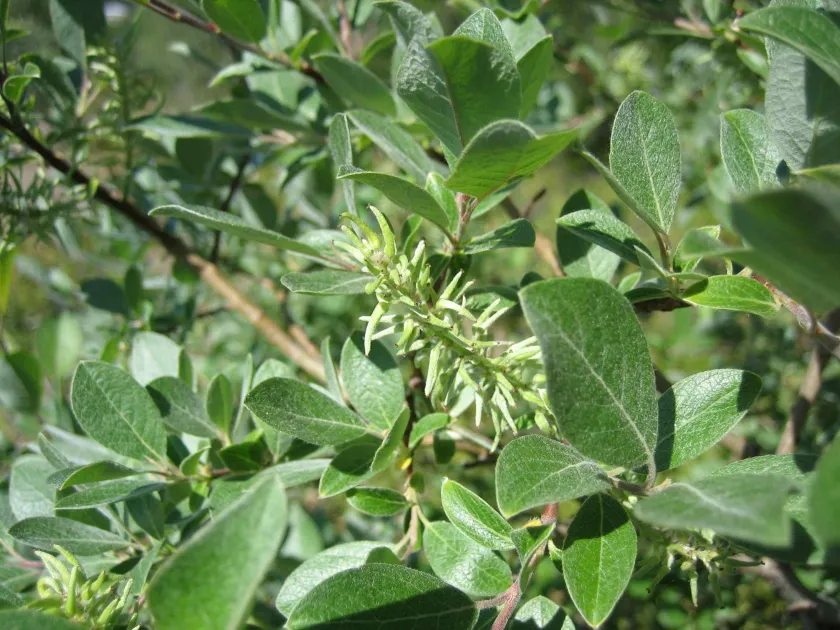
Botanically, it presents as a hardy shrub. Its leaves are structurally adapted to minimize water loss, often having a tougher texture compared to typical willows. The root system is deep and expansive, designed to anchor the plant in loose soil and seek deep-seated moisture.
In agricultural and landscaping contexts, it requires well-drained, porous soils. It is highly intolerant of waterlogging, so planting on raised mounds or on slopes with excellent natural drainage is recommended for optimal plant health.
Economic uses include its role in soil stabilization, windbreak creation in dry agricultural zones, and as a candidate for xeriscaping—a landscaping method that reduces or eliminates the need for supplemental irrigation.
Main diseases and pests
Like many Salix species, the Xerophilous willow can be susceptible to leaf rust, which manifests as pustules on the undersides of the leaves. Ensuring proper air circulation around the shrub significantly reduces the likelihood of infection.
Willow leaf beetles and certain lepidopteran larvae may feed on the foliage. While usually not fatal to established plants, significant infestations can reduce growth rates and overall aesthetic value.
Powdery mildew may occur if the plant is grown in environments with poor ventilation or high humidity levels that do not match its natural xerophilous requirements.
Aphids might colonize the plant during the spring growing season. Regular inspection of new growth tips can help in the early identification and management of these sap-sucking pests.
Proper environmental management is the best defense against pests and diseases. By ensuring the plant is not overwatered and receives full sunlight, growers can maintain a vigorous and resistant specimen.