
Wimmer willow
Salix wimmeriana
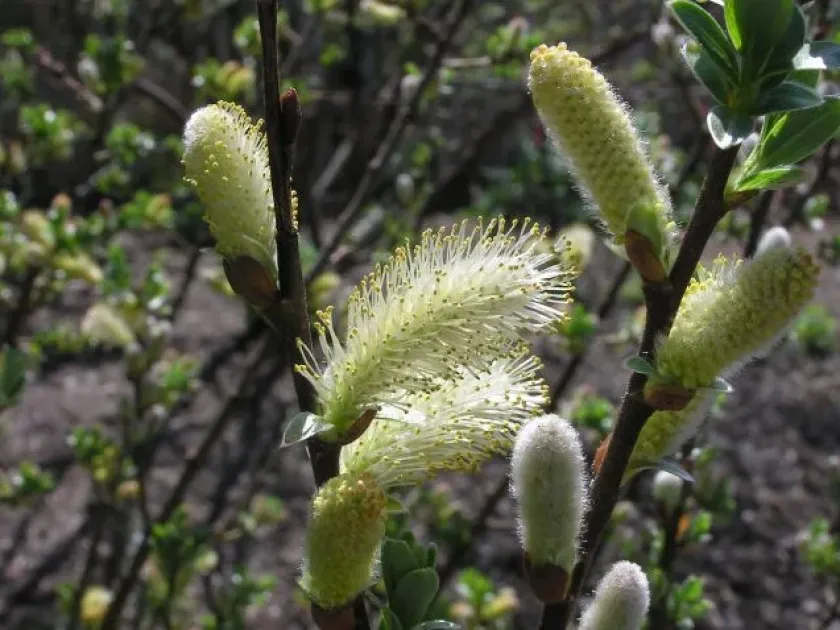
Description
Sowing dates
Propagation of Wimmer willow (Salix wimmeriana) for agricultural purposes is primarily carried out via vegetative methods. The best time for planting cuttings is early spring, before the active sap flow begins and buds start to burst.
For establishing commercial plantations, cuttings 20–25 centimeters long are planted in prepared soil, leaving only one bud above the surface. Ensuring firm contact between the cutting and the substrate is essential to prevent tissue desiccation.
Planting density varies depending on the purpose of the crop. When grown for biomass, schemes with row spacing of 70–150 centimeters are typically used to accommodate mechanical harvesting equipment.
The optimal soil temperature for the beginning of active root formation ranges from +8 to +12 degrees Celsius. Planting too early in cold soil slows down root development, which increases the risk of plant mortality.
Rooting occurs quite intensively with sufficient moisture levels. In the first months after planting, it is critical to maintain an optimal water regime, preventing the topsoil from drying out completely.
Growing requirements
Wimmer willow belongs to the Salicaceae family and is highly demanding of soil moisture. It thrives best in loamy and fertile alluvial soils where the groundwater table is relatively shallow.
The crop prefers open, well-lit areas. While it can tolerate temporary waterlogging, prolonged stagnant water can trigger root rot development.
The optimal pH range for cultivating this crop is 5.5–7.0. Soils with high salinity or extremely low nutrient content are not suitable for the efficient cultivation of Salix wimmeriana.
The crop demonstrates good frost resistance typical of species native to temperate European climates. However, in the first years of growth, young shoots may be damaged by severe spring frosts.
To ensure high biomass growth rates, the application of mineral fertilizers is required. Nitrogen nutrition plays a significant role in stimulating shoot growth in the first year after planting and after coppicing.
Yield
The yield of Wimmer willow as an energy crop is determined by the amount of dry biomass harvested per unit area. With intensive agronomic practices, yields can reach significant volumes, ensuring project profitability.
Willow biomass is used as a renewable source of solid biofuel. After processing into wood chips, it is suitable for combustion in specialized boilers or for pellet production, which possess high calorific value.
Agricultural use also includes strengthening riverbanks and erosion control. The willow's root system effectively retains soil, preventing landslides and the destruction of river slopes.
In breeding programs, this species is valued for the flexibility of its shoots and their rapid regeneration. The biomass harvest cycle typically ranges from two to three years, allowing for efficient plantation rotation planning.
The economic effect is achieved through the long-term use of rootstocks. Once established, a plantation can provide stable timber yields for 15–20 years, making it a long-term agricultural asset.
Main diseases and pests
The main pests for willow plantations are various species of leaf beetles, which can destroy a significant portion of the foliage in a short time. Their proliferation is often associated with warm and humid weather conditions.
Fungal diseases, such as rust and various leaf spots, pose a serious threat to crop productivity. Infections can lead to premature leaf drop and reduced rates of biomass accumulation.
An important control factor is adhering to crop rotation and using resistant cultivars. In the event of mass pest outbreaks, systemic insecticides authorized for agricultural use are applied.
Weed control in the first two years after planting is critical, as young willow competes poorly for light and nutrients. Suppressing weed vegetation allows plants to root and establish themselves faster.
Mechanical damage to stems by rodents or wild animals during the winter can provide entry points for pathogens, reducing timber quality and longevity.
Harvesting
Harvesting of Wimmer willow is conducted during the plant's dormant phase, once sap flow ceases and leaves have fallen. This usually occurs from late autumn to late winter, facilitating logistics and biomass storage.
Specialized harvesters equipped with chippers are used to cut the rods and convert them into wood chips simultaneously. This minimizes losses and reduces labor costs.
The cutting height should be minimal to stimulate the development of new shoots from dormant buds at the stump base. Leaving stumps too high reduces subsequent productivity and the quality of regrowth.
Collected wood chips require proper drying organization. Moisture content during storage must be reduced to a level that prevents spontaneous combustion and mold development, which is critical for energy use.
After harvesting, the site requires minimal maintenance: removal of plant residues and, if necessary, fertilization to ensure a healthy start to the next growing cycle.