
Wilhelms willow
Salix wilhelmsiana
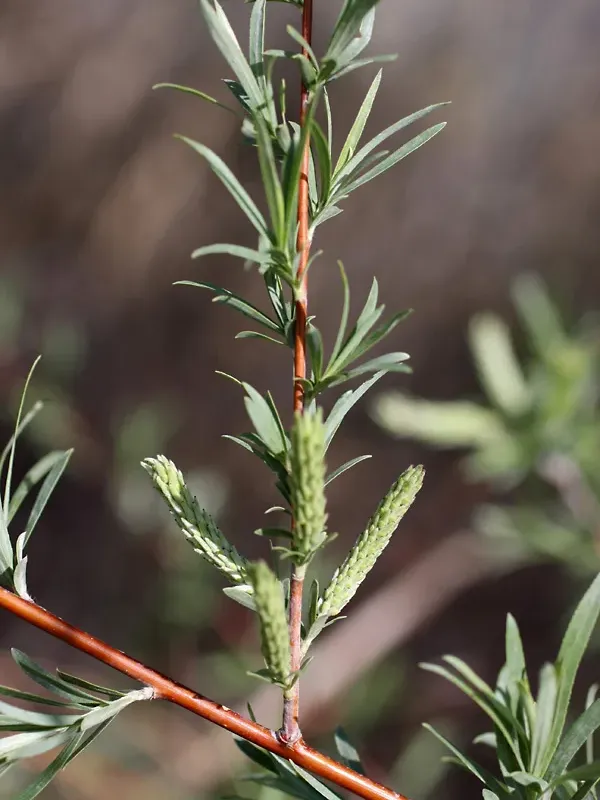
Description
Growing requirements
Wilhelms willow (Salix wilhelmsiana) is a perennial deciduous shrub belonging to the Salicaceae family. It is well-adapted to specific ecological niches, primarily along riverbanks and moist alluvial plains.
This species requires full sunlight to maintain its characteristic growth habit and dense foliage. It thrives in fertile, well-draining soils and exhibits significant resilience to temperature fluctuations within its native range.
Regarding cultivation, soil moisture management is crucial. While the plant can tolerate short periods of inundation, it performs best when the water table remains consistent throughout the growing season.
Pruning is essential for both aesthetic maintenance and commercial production. Periodic trimming encourages the development of long, flexible shoots that are highly valued for traditional basket weaving and artisanal crafts.
Landscape architects utilize this species for its erosion control properties, as the root system is highly effective at stabilizing loose or riparian soils in various environmental projects.
Main diseases and pests
The primary pathological threats to the species include fungal infections such as powdery mildew and leaf spot, which are often triggered by high humidity and poor ventilation within the shrub cluster.
Insect pests such as leaf beetles and willow aphids pose a significant risk, as they can cause extensive defoliation, which negatively impacts the overall vigor and growth rate of the willow.
Management strategies involve keeping the planting site free of debris and utilizing integrated pest management (IPM) to address outbreaks before they reach critical economic thresholds.
Fungicides and systemic insecticides should be applied sparingly, adhering strictly to local environmental guidelines to protect beneficial pollinators and surrounding soil health.
Routine inspections are highly recommended during the spring and early summer months, as this is when the lifecycle of the most common willow-specific pests begins.