
Nishiki Willow
Salix variegata
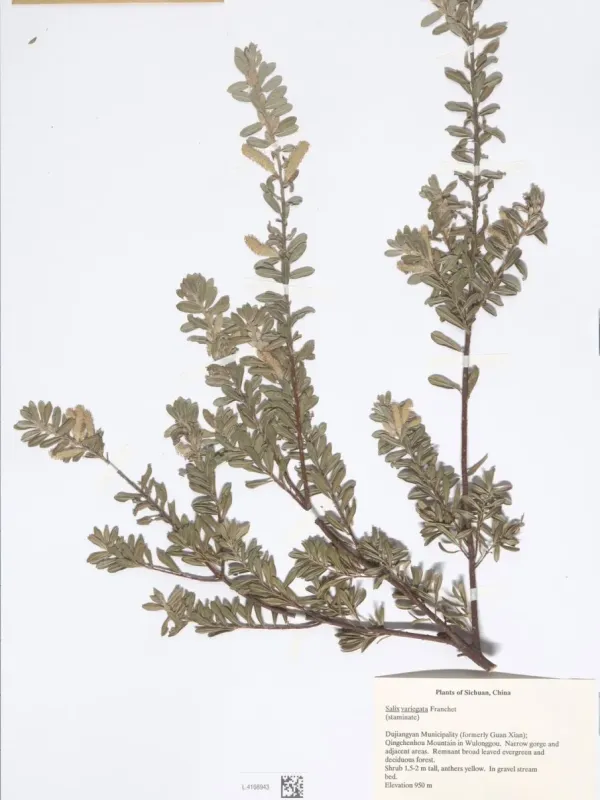
Description
Sowing dates
The Nishiki Willow (Salix integra 'Hakuro-nishiki') is a deciduous shrub belonging to the Salicaceae family, prized for its variegated pink, white, and green foliage. Propagation is primarily achieved through cuttings, which is the most reliable way to maintain the specific cultivar traits.
Cuttings can be taken during the dormant season or in early summer when the wood is still green. Providing a moist and well-aerated medium is essential for successful root development in nursery conditions.
When planting, it is crucial to select a location with full sun to partial shade. Exposure to direct sunlight is necessary to develop the vibrant pink coloration of the new leaves; excessive shade will result in duller, predominantly green foliage.
Planting in the ground is best performed in early spring or autumn. This allows the root system to establish itself in cool, moist soil before the onset of extreme summer heat or winter dormancy.
Adequate spacing between plants is important for air circulation, which prevents the buildup of humidity within the foliage canopy and reduces the risk of fungal infections.
Growing requirements
This species is highly dependent on consistent soil moisture. It performs best in fertile, loamy soils that hold water well but still have good drainage to prevent root rot in saturated conditions.
The soil pH should ideally range from slightly acidic to neutral. High alkalinity or salinity can lead to iron chlorosis, manifesting as yellowing between the veins of the leaves, which significantly impacts the ornamental value.
While relatively hardy, young Nishiki Willows may require protection during exceptionally cold winters. Standardized trees are particularly vulnerable, and the graft union should be protected from harsh freezing winds.
Watering is the most critical maintenance task, especially during the first few growing seasons. Mulching around the base helps retain soil moisture and keeps the roots cool during the heat of the summer.
Fertilization should be limited to the early spring to promote vigorous new growth. Avoiding late-season nitrogen applications is vital to ensure that new shoots have enough time to lignify before the first frost.
Main diseases and pests
Fungal diseases, including powdery mildew and various leaf spots, are the most common threats to the Nishiki Willow. These typically appear during periods of high humidity and poor airflow.
Insect pests such as willow aphids, spider mites, and leaf beetles can cause damage to tender foliage. Early identification of these pests is essential for effective integrated pest management.
Control of fungal issues involves pruning to improve air circulation and applying systemic fungicides if necessary. Removing and disposing of fallen infected leaves helps prevent the reinfection cycle.
For pest control, appropriate insecticides or horticultural oils can be used. Regular inspection of the undersides of leaves is recommended to detect spider mite infestations before they become severe.
Maintaining plant vigor through correct watering and feeding is the best preventative strategy. A healthy plant has superior natural defenses against minor pest and disease outbreaks.
Harvesting
The primary harvest for this ornamental shrub is the strategic pruning required to maintain its shape. Regular cutting is essential to keep the plant compact and to encourage the growth of new, vividly colored shoots.
Annual spring pruning is mandatory to remove dead, damaged, or weak wood. Cutting back the previous year’s growth by a significant portion will result in a dense, lush, and colorful canopy.
Summer maintenance pruning may be performed to tidy the plant's appearance. Removing unruly branches helps maintain the desired geometric shape, whether grown as a shrub or a standard tree.
Although the clippings have little agricultural value, they are excellent for decorative floral arrangements due to their unique variegated stems and foliage, often sought after by florists.
Skilled pruning techniques allow the grower to manipulate the habit of the Nishiki Willow, making it a versatile architectural element in landscape design. Proper management of growth cycles is fundamental to the longevity of the plant.