
Bearberry willow
Salix uva-ursi
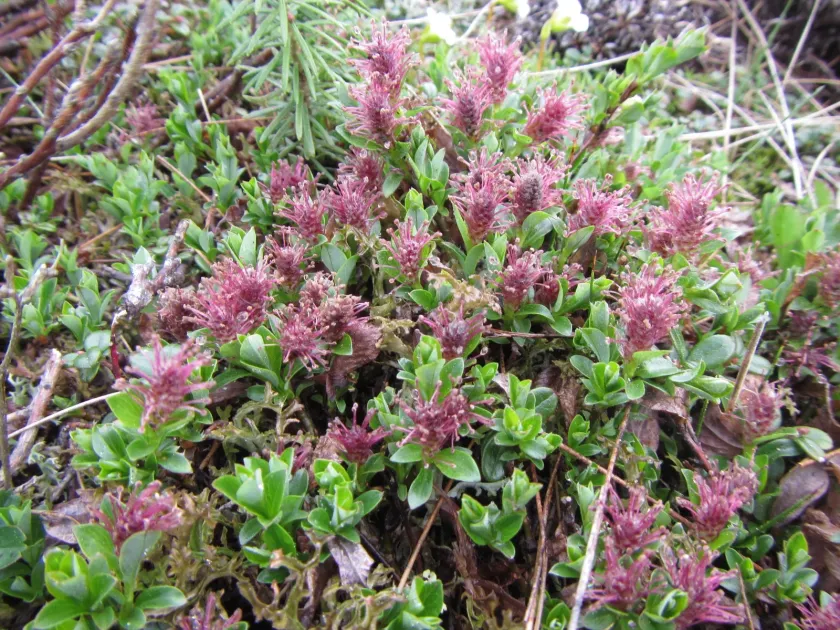
Description
Growing requirements
Bearberry willow (Salix uva-ursi) is a prostrate, alpine dwarf shrub belonging to the Salicaceae family. It is native to the northern regions of North America, where it thrives in rocky, tundra-like conditions.
The plant is botanically characterized by its mat-forming habit, small glossy leaves, and significant resistance to low temperatures. It is perfectly adapted to survive in harsh, windswept environments by hugging the ground.
Regarding soil requirements, the species demands gritty, well-drained substrate. It does not tolerate heavy, waterlogged clays and prefers an acidic to slightly neutral soil pH to mirror its natural habitat.
Climate conditions for this willow must be cool. In regions with long, hot summers, it requires careful site selection, including partial shading during peak sunlight hours to prevent the roots from overheating.
Maintenance is relatively low, focusing on ensuring proper water management. Providing a layer of gravel or stone mulch around the base helps retain consistent soil moisture and keeps the foliage clean.
Main diseases and pests
The primary threats to Salix uva-ursi are fungal pathogens such as leaf spot and rust. These issues are most prevalent during seasons with high humidity or poor air circulation within the shrub canopy.
Pest pressures typically involve common willow pests, including aphids and various beetles that feed on the foliage. Early detection is essential to preventing significant damage to the plant's delicate structure.
Root rot is a common failure point for this culture. It occurs almost exclusively when the plant is grown in soil that lacks sufficient drainage or when irrigation is excessive during dormant periods.
Chemical control should be used judiciously, prioritizing biological agents when possible. Application of systemic fungicides during the early spring can effectively reduce the risk of later seasonal infection.
Regular sanitation of the planting area is vital. Removing dead organic debris from around the plant minimizes the shelter available for pests and prevents the spread of soil-borne fungal spores.