
Yewleaf willow
Salix taxifolia
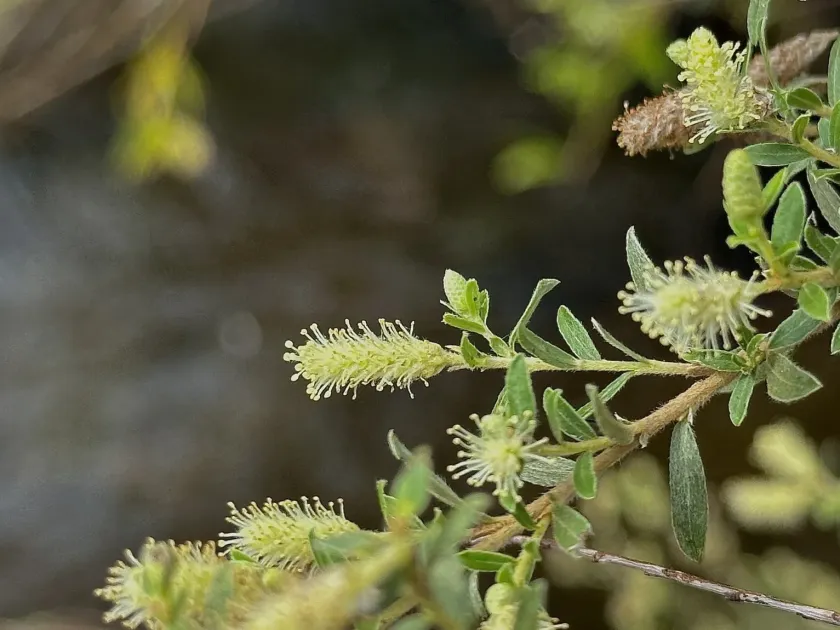
Description
Growing requirements
The Yewleaf willow (Salix taxifolia) is an ornamental shrub belonging to the Salicaceae family. It is distinct for its fine, silvery-green foliage that resembles yew needles, making it a unique addition to formal and informal landscapes.
Native to the southwestern United States and Mexico, this species thrives in climates with warm temperatures. It requires a sunny exposure to maintain its compact habit and vibrant leaf color, as shade often causes the shrub to become straggly.
Regarding soil requirements, the Yewleaf willow prefers moist, well-draining soil. It is naturally adapted to riverbanks and riparian zones, meaning it demands consistent water supply during the active growth phase to prevent leaf desiccation.
The cultural maintenance involves regular pruning to keep the shrub in a desirable shape. Since it produces numerous stems from the base, thinning out older wood every few years encourages vigorous new growth and improves the plant's health.
Hardiness varies by cultivar and local microclimate. While it handles some heat exceptionally well, in colder northern regions, young specimens require mulch and protection from desiccating winter winds to survive the cold season.
Main diseases and pests
Fungal leaf spots are among the most common threats to the Yewleaf willow, particularly in areas with high humidity. These diseases appear as dark lesions on the leaves, which can lead to premature leaf drop if not managed correctly.
Pests such as aphids and willow beetles are frequently found on the undersides of leaves. These insects feed on plant sap and tissue, so integrated pest management and timely applications of horticultural soaps are often necessary.
Root rot is a critical risk, especially when the plant is grown in heavy, poorly draining soils. To mitigate this, ensure the planting site has excellent drainage and avoid saturating the root zone for extended periods.
Scale insects can infest the branches, causing localized dieback. These pests are often protected by a hard shell, making contact insecticides less effective; therefore, systemic treatments are usually recommended by arborists.
Canker diseases can affect the main stems, often introduced through pruning wounds. To prevent infection, all tools must be sterilized before use, and pruning should be done during dry weather to minimize the risk of pathogen entry.