
Starke willow
Salix starkeana
Description
Growing requirements
Starke willow (Salix starkeana) is a perennial shrub belonging to the Salicaceae family. It is native to the temperate forest zones of Northern Europe and Asia, where it typically inhabits wetlands, meadows, and forest clearings.
This species is well-regarded for its robust nature and adaptability to various soil types, ranging from sandy loams to peat-rich environments. It thrives in sunny locations but can tolerate partial shade, provided the soil moisture remains consistent during the growing season.
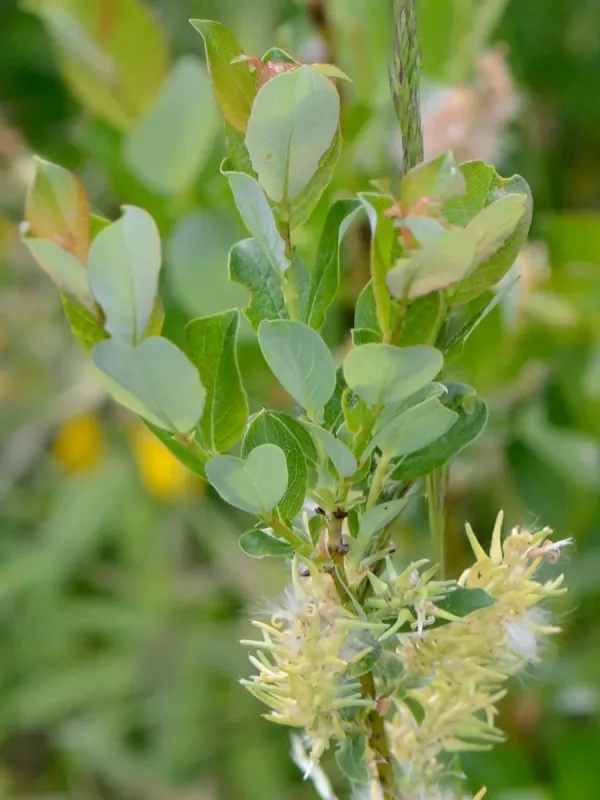
Botanically, Salix starkeana is characterized by its spreading growth habit and thin, flexible branches. The leaves are typically elliptic to obovate, sometimes with fine pubescence, which serves as an evolutionary adaptation to variable climate conditions.
Cultivation practices primarily involve site selection with adequate soil aeration and moisture retention. Propagation is commonly achieved through cuttings, which root easily if planted in moist, well-prepared nursery soil during the early spring months.
Beyond its ecological importance in stabilizing soil and preventing erosion, Starke willow is used in basketry and as a nectar-rich source for early pollinators, making it an essential component of biodiverse agricultural landscapes.
Main diseases and pests
The primary threats to Starke willow health include fungal diseases such as leaf rust and powdery mildew. Maintaining proper plant spacing to ensure sufficient airflow is the most effective cultural practice to prevent outbreaks of these pathogens.
Common insect pests include willow leaf beetles and various species of caterpillars. In commercial cultivation, monitoring for early infestation signs is crucial for applying appropriate management strategies, including the use of botanical insecticides or biological control agents.