
Sitka willow
Salix sitchensis
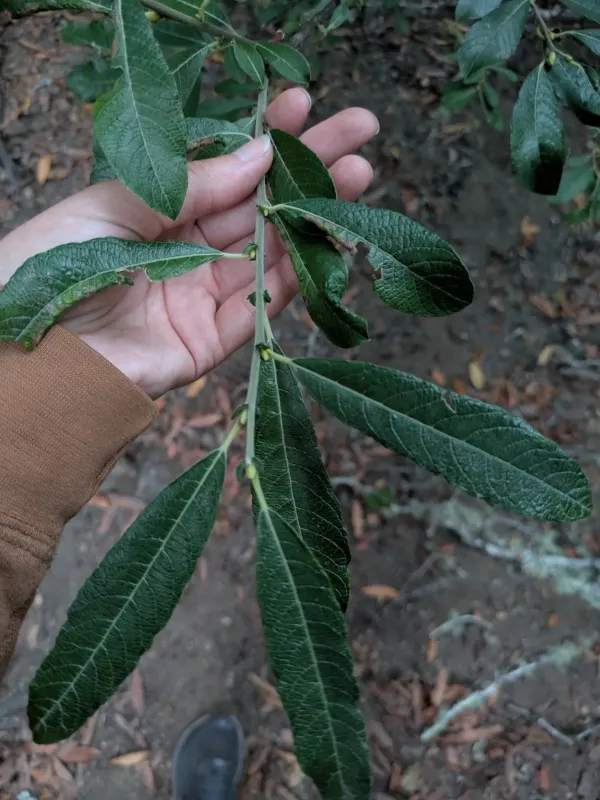
Description
Growing requirements
Sitka willow (Salix sitchensis) is a member of the Salicaceae family. It typically grows as a deciduous shrub or a small tree, ranging in height from 3 to 10 meters depending on the site conditions and competition with surrounding vegetation.
Native to the Pacific Northwest region of North America, this species thrives in moist environments. Its natural habitat includes stream banks, moist forests, and edges of wetlands, where it plays a critical role in stabilization.
The plant requires high moisture levels and does not tolerate drought conditions. It performs best in soils with high organic content that can retain water, yet it remains relatively tolerant of various soil textures provided they stay damp.
Climate requirements for this species are centered on cool, humid conditions typical of coastal zones. It requires full sunlight to achieve its full growth potential, though it can tolerate partial shade in specific woodland conditions.
Agrotechnical maintenance focuses on ensuring consistent soil moisture. Mulching around the base of the plant can help maintain soil temperature and moisture levels, mimicking the natural forest floor environment.
Harvesting
While often used for environmental restoration, the harvest of Sitka willow is primarily focused on the production of basketry materials and biomass. Annual pruning or coppicing is the most common harvesting method used.
Coppicing involves cutting the stems back to near ground level during the plant's dormant season. This technique stimulates the production of long, flexible shoots that are ideal for crafts, furniture making, or structural weaving.
In biomass applications, mechanical harvesting is performed every 2 to 3 years. This cycle maximizes the volume of woody biomass produced by the plant, ensuring sustainable yields for bioenergy purposes.
Proper harvesting tools must be kept sharp to ensure clean cuts, which prevent the entry of pathogens into the root system. Clean incisions are vital for the rapid regeneration of new shoots in the following spring season.
After harvesting, the material should be processed or dried immediately to prevent rotting. For basketry, shoots are often graded by length and diameter before being bundled and stored in a well-ventilated, dry place.