
Thyme-leaved willow
Salix serpyllifolia
Description
Growing requirements
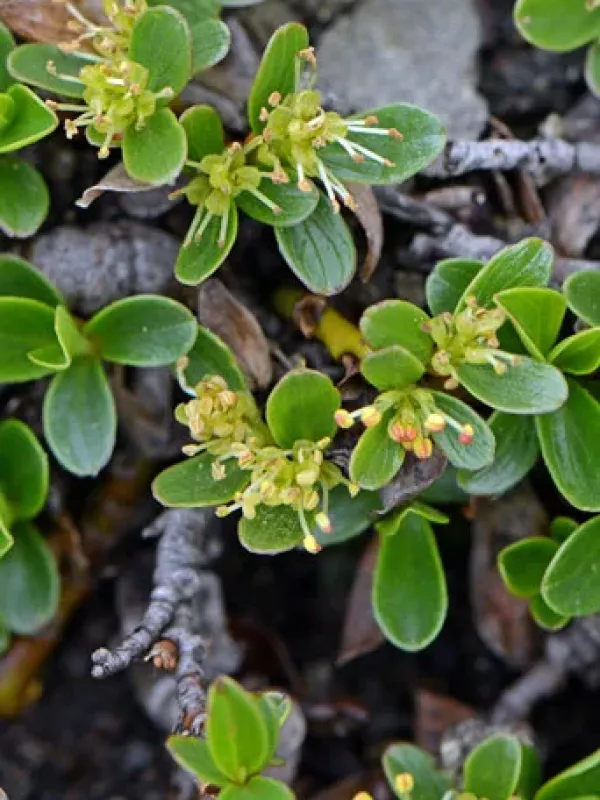
The thyme-leaved willow (Salix serpyllifolia) is a prostrate, woody dwarf shrub belonging to the Salicaceae family. Native to the alpine and subalpine zones of the European mountains, it is specifically adapted to extreme environments characterized by thin soils and short growing seasons.
Botanically, it is a mat-forming plant that rarely exceeds 10 centimeters in height. Its small, dark green leaves and resilient stems allow it to survive in crevices and on rocky slopes where most other woody species cannot thrive. The plant features minute, catkin-like inflorescences that appear in spring.
The cultivation requirements focus on mimicking high-altitude conditions. It demands excellent drainage, as the roots are highly susceptible to rot in stagnant, waterlogged soil. A grit-heavy substrate or rocky garden bed is essential for the long-term survival of the specimen.
Climate-wise, this willow prefers cool summers and sufficient humidity. It does not tolerate prolonged heatwaves or excessive drought, which can lead to rapid wilting and leaf drop. Optimal placement includes north-facing slopes or areas with moderate ambient moisture.
Regarding its utility, the species is highly prized in landscape design for rock gardens, stone troughs, and alpine beds. It serves as an excellent ground cover that prevents soil erosion on small inclines and provides a naturalistic, wild appearance to modern garden landscapes.
Main diseases and pests
Primary threats to Salix serpyllifolia include fungal infections such as rusts and mildews, which flourish in stagnant air or damp conditions. Ensuring good airflow around the mat is a critical cultural practice to prevent these pathogens from spreading across the foliage.
Pest issues include typical willow inhabitants like aphids, which tend to infest the tender growth tips. In dry, hot summers, red spider mites may also become a concern. Integrated pest management using gentle soaps or oils is recommended, avoiding harsh chemicals that could damage the delicate alpine foliage.