
Silky willow
Salix sericea
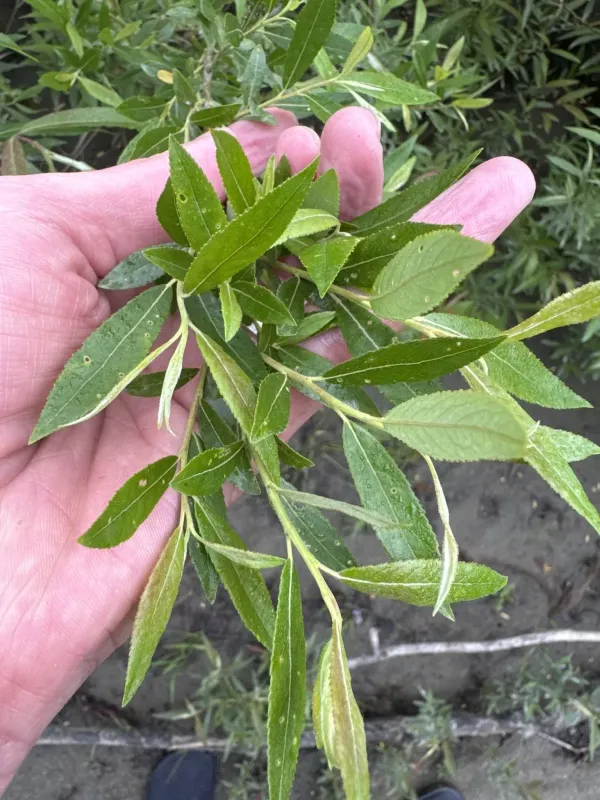
Description
Growing requirements
The Silky willow (Salix sericea) belongs to the Salicaceae family and is a deciduous shrub native to the eastern parts of North America.
This species thrives in areas with consistently moist soil. In its natural habitat, it is commonly found along stream banks, river floodplains, and wetland meadows where water is abundant.
The plant is well-adapted to temperate climates but requires significant sunlight to maintain healthy growth rates and proper vigor throughout the growing season.
While not strictly demanding regarding soil composition, it prefers rich, alluvial soils with a neutral to slightly acidic pH to reach its maximum productivity.
Successful cultivation requires careful water management, as the plant does not tolerate prolonged drought conditions, which can lead to premature wilting and stunted development.
Yield
The primary economic use of the Silky willow involves harvesting high-quality flexible twigs for basketry, as well as utilizing the species for streambank stabilization and phytoremediation.
Biomass yield depends heavily on planting density and regular pruning cycles. Consistent cutting of old stems promotes the emergence of new, flexible shoots suitable for industrial use.
The species possesses an excellent root regeneration capacity. Under optimal conditions, the first harvestable yield is typically achieved by the third year after establishment.
Silky willow is also a valuable early-season honey plant, providing crucial nectar and pollen for pollinators when few other sources are available in early spring.
Ecologically, the plant is highly effective in wastewater treatment projects due to its ability to absorb and sequester specific heavy metals from the soil and water.
Main diseases and pests
Common fungal diseases affecting this species include rusts and various leaf spots, which typically flourish in environments with high humidity and poor air circulation.
Pests such as leaf beetles, willow moth larvae, and aphids can cause significant damage to foliage, which reduces the plant's overall photosynthetic capacity.
Maintaining proper spacing between shrubs is essential to ensure adequate airflow and to prevent the rapid spread of infections across the plantation.
Integrated pest management strategies are recommended, with a focus on biological control agents to protect the surrounding water quality in riparian zones.
Routine removal and destruction of fallen leaves and infected woody debris are vital steps in managing the overwintering populations of common willow pests and pathogens.