
Purple willow
Salix rubra
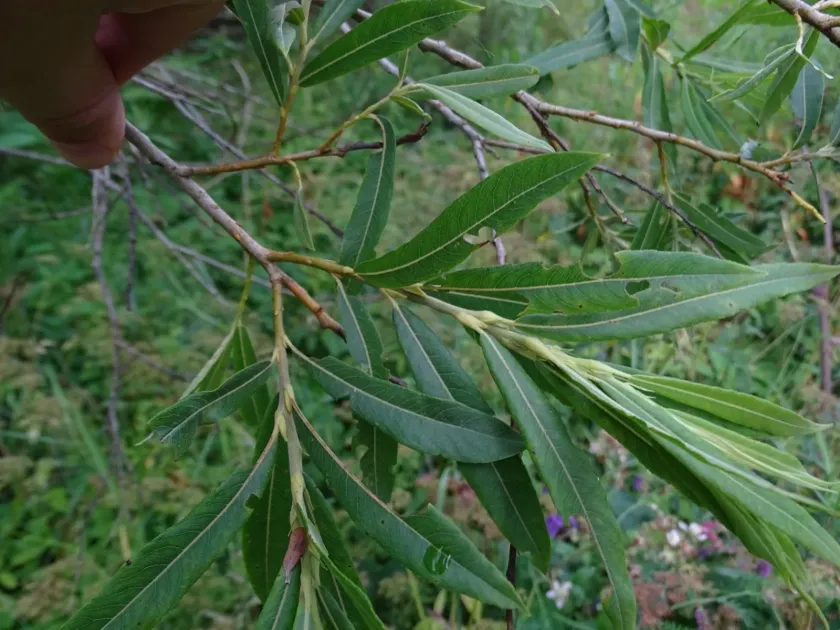
Description
Sowing dates
The propagation of Salix rubra is primarily achieved through the use of hardwood cuttings, a method that ensures genetic uniformity and high survival rates. Cuttings are harvested during the dormant season, typically in late autumn or early spring before the buds begin to break.
Cuttings, usually 20–30 centimeters in length, are planted in well-prepared, moist soil. It is essential to ensure that the soil has sufficiently thawed and warmed up to promote rapid root initiation. The cuttings are inserted into the ground with only the topmost bud exposed to air.
Spacing strategies are determined by the intended end-use of the willow. For high-quality basketry rods, dense planting is preferred, which encourages vertical, branch-free growth. For biomass production, wider spacing is utilized to maximize the total volume of woody material per hectare.
Successful establishment requires careful soil moisture management during the first year of growth. Mechanical weeding between the rows is critical to reduce competition from invasive weeds, allowing the willow roots to establish a strong foundation in the primary development phase.
Proper timing of planting is crucial for the long-term success of the plantation. Early spring planting is generally recommended in temperate regions, as it provides a longer growing season, enabling the plants to store enough energy reserves to survive the subsequent winter period successfully.
Growing requirements
Salix rubra thrives in moist, fertile soils, particularly in alluvial plains and riparian zones. While it prefers sandy loams that offer good drainage and aeration, it is remarkably resilient and can tolerate various soil textures, provided that water does not remain stagnant for extended periods.
The crop is well-adapted to temperate climates, displaying excellent cold hardiness. It performs best in full sunlight, as shade-free environments are vital for maintaining the high rates of photosynthesis required for rapid biomass accumulation and the production of flexible, high-quality rods.
Soil pH ranging from slightly acidic to neutral is ideal for optimal nutrient availability. While the plant is robust, regular fertilization with nitrogen-based nutrients during the active growing season significantly improves the annual yield and enhances the overall vigor of the plantation.
Protection from high wind exposure is important to prevent mechanical damage to the young, developing shoots. A sheltered site helps maintain the structural integrity of the rods, which is particularly important for commercial basketry, where branch-free stems are highly valued by artisans.
In regions prone to summer droughts, irrigation is an essential component of professional cultivation. Drip irrigation systems are highly efficient for willow plantations, ensuring that moisture is available directly in the root zone throughout the critical stages of shoot elongation.
Yield
Yield potential in Salix rubra plantations is high, typically reaching full production capacity by the third to fifth year. A well-maintained plantation can remain productive for over a decade, provided that harvesting techniques support the continuous regeneration of the rootstock.
Typical biomass yields range from 10 to 18 tonnes of dry matter per hectare per year. These figures can vary based on soil fertility, planting density, and the implementation of advanced agronomic practices, such as precision fertilization and effective weed control strategies.
The quality of the harvest is measured by the length, diameter, and flexibility of the rods. Following the harvest, careful grading of the material allows growers to categorize the product for different market segments, ranging from artisanal basket weaving to industrial biofuel chip production.
Yield curves are optimized through systematic rejuvenation of the plantation. Periodic pruning or cutting back of the stools encourages vigorous new shoot formation, which prevents the decline of growth rates that can occur as the plants age without proper canopy management.
Beyond traditional industrial uses, willow plantations contribute to environmental sustainability. In these systems, yield is evaluated not only by the harvestable biomass but also by the role of the roots in sequestering carbon and providing soil stability against water erosion.
Main diseases and pests
Salix rubra is susceptible to various fungal pathogens, including willow rust and anthracnose, which can cause significant damage to the foliage and stems. Integrated pest management, focusing on early detection and the use of resistant varieties, is the primary method for disease control.
Insect pests, such as leaf beetles and willow aphids, can significantly reduce the photosynthetic capacity of the plants by defoliating them. Constant monitoring during the spring and early summer allows for timely intervention, preventing widespread damage across the plantation acreage.
Small mammals and rodents represent a risk to young plantations, particularly during winter months when food resources are scarce. Mechanical barriers or the application of non-toxic repellents are often necessary to protect the thin bark of the willows from being gnawed by herbivores.
Abiotic stressors, such as late spring frosts, may affect the development of tender shoots. Choosing cultivars that are specifically suited to the local climatic conditions is a critical preventive measure that helps mitigate the risk of productivity loss due to unpredictable weather events.
A comprehensive approach to plant health includes proper site sanitation. Removing infected plant debris from the field at the end of the season reduces the primary inoculum levels for the following year, which is a fundamental practice in maintaining a healthy and productive crop.
Harvesting
Harvesting for Salix rubra occurs during the dormant season, after leaf fall and before the sap begins to rise in the spring. Harvesting at this time ensures the rods have matured, providing the necessary mechanical strength and flexibility for professional weaving and structural applications.
The rods are cut as close to the ground as possible, either manually with hand tools or mechanically with specialized cutters. A clean, precise cut is essential for promoting uniform shoot regrowth from the stool in the upcoming growing season and minimizing decay issues.
Post-harvest processing involves bundling the rods and storing them in well-ventilated, covered structures. Controlled drying is vital to reduce moisture content to acceptable levels, which prevents mold growth and ensures the material remains in high-quality condition for long-term storage.
For specific industrial applications, the rods may undergo boiling or debarking processes. These treatments improve the aesthetic quality and workability of the material, making it more pliable and allowing weavers to create intricate patterns and durable objects for various decorative uses.
When grown for biomass energy, the harvesting process is fully mechanized using specialized harvesters that cut and chip the willow in a single pass. This chipped material is then transported directly to energy facilities to be utilized as a renewable fuel source for heat generation.