
Rosemary-leaved willow
Salix rosmarinifolia
Description
Growing requirements
The rosemary-leaved willow (Salix rosmarinifolia) is a deciduous shrub belonging to the Salicaceae family. It is native to temperate Eurasia, naturally occurring in habitats such as peatlands, moist meadows, and the borders of wetlands, where it thrives in high-moisture environments.
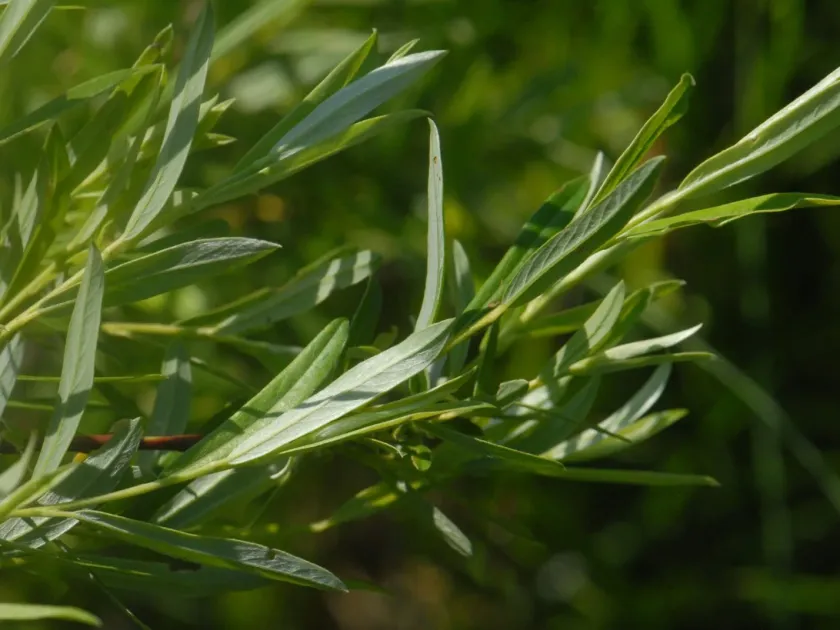
This species is characterized by its slender, flexible shoots and narrow, lanceolate leaves that feature a distinctive silvery-grey pubescence on the underside. The plant typically grows as a dense, rounded shrub, reaching heights of up to 1.5 meters, making it ideal for smaller gardens or naturalistic landscaping.
Cultivation requires sites with consistent moisture levels and plenty of sunlight. While the plant is notably hardy and tolerant of cold winters, it is sensitive to prolonged drought, so it should ideally be planted in soils that retain water well, such as loams or organic-rich peaty soils.
Agrotechnical management involves regular pruning to maintain shape and encourage dense foliage growth. Due to its extensive root system and preference for damp areas, it is frequently used for soil stabilization along water bodies, serving both an aesthetic and a functional ecological purpose.
The rosemary-leaved willow is highly regarded in horticulture for its adaptability to wetland conditions where many other woody species fail. Its unique aesthetic properties make it a preferred choice for rain gardens, waterside planting schemes, and as a natural element in ecological restoration projects.
Main diseases and pests
Common issues include fungal infections like leaf rust and powdery mildew, which thrive in humid or stagnant conditions. Regular thinning of the branches to improve airflow within the canopy is a recommended practice to reduce the prevalence of these common willow diseases.
Pests such as willow aphids and various leaf-beetles can occasionally pose a threat to the plant's health. Monitoring for signs of insect activity during the spring and early summer is essential, followed by targeted treatment with appropriate horticultural oils or insecticides when necessary.