
Retuse willow
Salix retusa
Description
Growing requirements
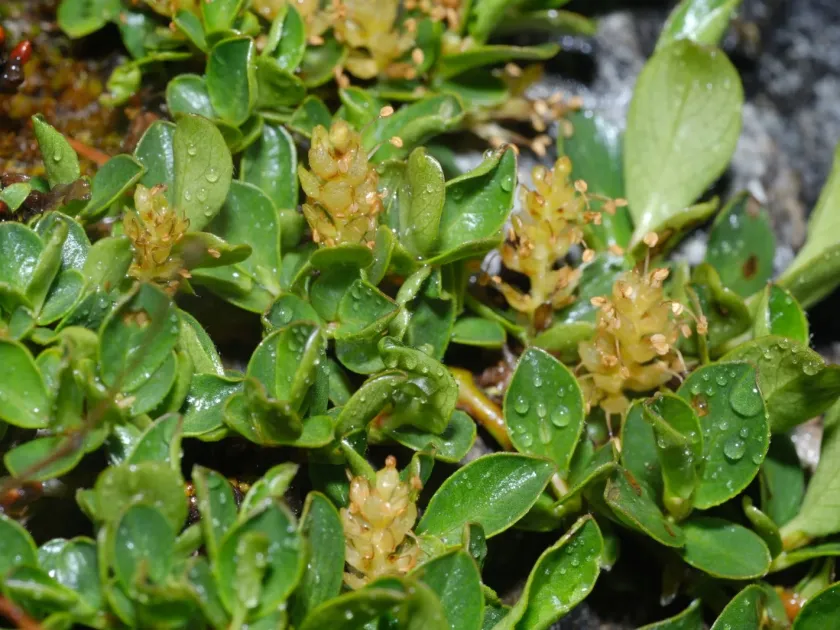
The retuse willow (Salix retusa) is a dwarf creeping shrub belonging to the Salicaceae family. It is naturally found in the alpine and subalpine zones of the European mountains, where it survives in harsh, rocky environments at high altitudes.
Botanically, this species is defined by its prostrate growth habit, forming dense mats that hug the ground. Its leaves are small, leathery, and often obovate or retuse, which serves as a protective mechanism against intense wind and high UV radiation.
To cultivate this plant successfully, it is essential to replicate its natural habitat by providing full sun exposure. The retuse willow is strictly photophilous; lack of light will cause the plant to stretch and lose its characteristic dense, mat-forming architecture.
Regarding soil, this species prefers well-draining, slightly acidic to neutral mineral-rich substrates. It is highly recommended to use rocky or sandy soil mixtures when planting in gardens, as stagnant water is detrimental to its shallow root system.
The retuse willow is remarkably hardy and well-adapted to cold climates. It does not require intensive agricultural input, but consistent moisture during the initial establishment phase is key to ensuring that the creeping stems root firmly into the soil.
Main diseases and pests
The primary threats to the health of this willow species are fungal pathogens, particularly those causing leaf spots or blight during periods of excessive humidity. Proper airflow around the plant canopy is the best cultural practice to prevent such issues.
Pests such as aphids or spider mites can occasionally colonize the foliage during prolonged hot and dry spells. Effective management involves maintaining plant vigor through appropriate watering and, if necessary, applying systemic insecticidal treatments.