
Balsam willow
Salix pyrifolia
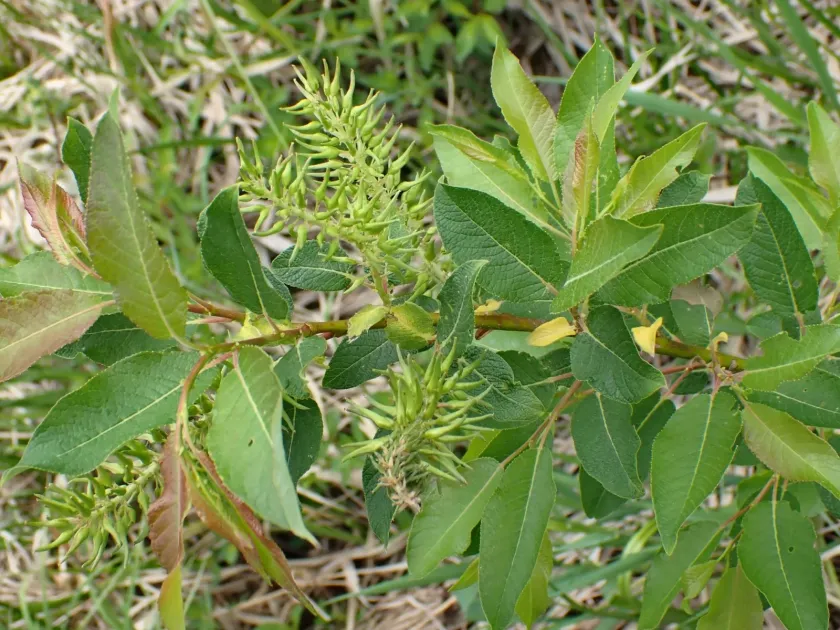
Description
Growing requirements
Balsam willow (Salix pyrifolia) is a perennial shrub or small tree belonging to the Salicaceae family. Native to the northern regions of North America, this species is typically found in moist environments, including river banks, lake margins, and wet meadows, where it thrives in high soil moisture conditions.
Botanically, it is distinguished by its glossy, pear-shaped leaves and reddish-brown to dark gray twigs. The plant usually grows as a thicket-forming shrub, displaying a wide, spreading habit, which makes it a visually appealing component in naturalistic landscapes and wetland restoration projects.
Regarding climatic requirements, Salix pyrifolia is exceptionally cold-hardy, adapting well to northern climates with harsh winters. It demands ample moisture throughout the growing season and performs poorly in dry, sandy soils, preferring the consistent saturation found in riparian zones or heavy clay soils.
Soil requirements for this culture include rich, slightly acidic to neutral substrates. While it can tolerate minor seasonal flooding, it is essential to ensure that the root system has sufficient aeration during non-flood periods to prevent root rot and physiological stress caused by stagnant water conditions.
Cultural practices include periodic pruning to remove dead or diseased wood, which encourages the development of healthy new stems. In professional landscape management, mulch application around the base is recommended to maintain soil moisture levels and suppress weed competition during the early stages of growth.
Main diseases and pests
The primary threats to Balsam willow include fungal pathogens such as leaf rust and powdery mildew. These diseases thrive in environments with poor air circulation and high humidity. Proper site selection, ensuring good airflow around the canopy, is a critical preventive measure for any planting scheme.
Pest issues frequently involve leaf-feeding beetles, such as the willow leaf beetle, which can skeletonize foliage if left untreated. Integrated pest management strategies, utilizing selective biological controls or systemic insecticides when necessary, are the most effective way to manage infestation levels.
Aphid colonies can occasionally colonize young stems during the spring growth flush, leading to leaf curling and stunted development. Monitoring for early signs of aphids allows for timely intervention using mild insecticidal soaps, which are generally safe for the plant and the surrounding ecosystem.
Stem cankers caused by opportunistic fungi can enter the plant through mechanical wounds, such as those caused by animal grazing or improper pruning tools. Sanitation of all cutting equipment is mandatory to prevent the transmission of pathogens from infected trees to healthy specimens in the nursery.
Economically, the species is utilized for shoreline stabilization, wetland habitat enhancement, and as a decorative choice for large-scale landscaping. Its ability to tolerate wet soils makes it a preferred plant for bioengineering projects aimed at preventing erosion in vulnerable riparian landscapes.