
Pyrenean willow
Salix pyrenaica
Description
Growing requirements
The Pyrenean willow (Salix pyrenaica) is a member of the Salicaceae family, native to the high-altitude mountain ranges of the Pyrenees. This dwarf, deciduous shrub is specially adapted to the harsh conditions of alpine environments, often found growing in rocky crevices and subalpine grasslands.
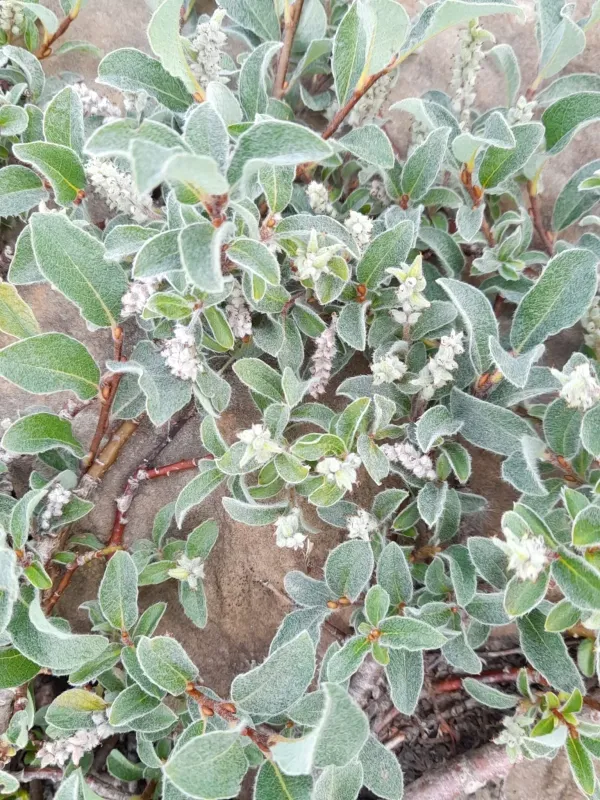
Botanically, it is classified as a prostrate or mat-forming willow, typically reaching only 15 to 30 centimeters in height. Its small, elliptical leaves are often covered in fine, silky hairs, which provide an elegant appearance and protect the plant from excessive moisture loss in high-altitude environments.
To cultivate this species successfully, it is essential to provide a cool climate. The Pyrenean willow thrives in locations that mimic its natural habitat, such as north-facing slopes or cool rock gardens. It is not well-suited to hot, humid summers, which can stress the plant and lead to growth failure.
Soil requirements focus on excellent drainage; waterlogging is the most common cause of root rot in this species. A gritty, neutral to slightly acidic, lean soil mix is preferred. Regular moisture is necessary, but the soil should never remain soggy or saturated for prolonged periods.
In terms of хозяйственное (landscaping) usage, the Pyrenean willow is highly valued in rockeries and alpine landscaping. It serves as an excellent groundcover plant that helps stabilize small, stony embankments and adds a natural, rustic charm to cold-climate gardens where other ornamental plants might struggle.
Main diseases and pests
The plant is susceptible to various fungal infections, particularly those causing leaf spot or powdery mildew. These issues often arise when the foliage remains wet for extended periods or when air circulation around the compact mats is insufficient. Proper spacing is key to disease prevention.
Insect pests such as willow aphids and various leaf-feeding beetles can occasionally infest the shrub during the spring growth flush. Regular monitoring and the application of horticultural soaps or specific insecticides are recommended to manage these threats before they can cause significant foliage damage.