
Polar willow
Salix polaris
Description
Growing requirements
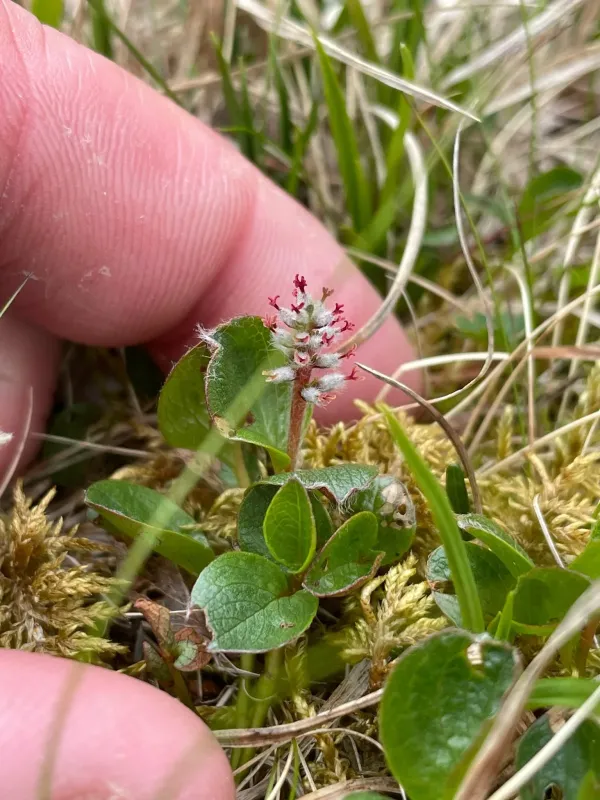
The Polar willow (Salix polaris) is a miniature woody shrub belonging to the Salicaceae family. It is recognized as one of the northernmost woody plants on Earth, having developed specialized adaptations to thrive in the harshest tundra and arctic environments.
This species naturally occurs in the arctic regions of Eurasia and North America, where it forms low-lying mats. The plant is perfectly suited for life on permafrost, utilizing its small size to remain shielded by winter snow, which prevents tissue damage from extreme temperatures.
In terms of habitat requirements, the Polar willow prefers moist, well-drained soils, often found in rocky tundra, debris slopes, or along the edges of water bodies. It requires high solar irradiance during the short summer period to complete its life cycle successfully.
Successful growth of Salix polaris depends on the stability of the active soil layer. It does not tolerate prolonged stagnation of water but requires consistent moisture during the growing season, which is provided by the seasonal melting of the snowpack.
Economically and ecologically, this plant serves as a vital component in erosion control in polar environments. Furthermore, it represents an essential nutritional source for herbivores, such as reindeer and muskoxen, during the brief arctic summer.
Main diseases and pests
The health of Polar willow populations is primarily threatened by fungal pathogens, particularly in areas where humidity levels rise due to abnormal warming. Rusts and various spot diseases can lead to premature leaf drop and decreased photosynthetic capacity.
Insects, particularly leaf-feeding beetles and sawfly larvae, are common pests that can inflict heavy defoliation. Given the extremely short growing season, such damage is difficult for the plant to recover from, potentially leading to individual mortality.
Climate change poses a systemic threat to the species, as rising temperatures alter the active soil layer depth and competition from more vigorous sub-arctic plant species increases. This may force the Polar willow to retreat to more extreme northern habitats.
Human activities, including land development and heavy grazing, cause mechanical damage to the shallow root systems. Due to the slow growth rate of the species, physical disturbance recovery takes many years or even decades in the arctic climate.
- Fungal infections (leaf spots and rust)
- Defoliation by leaf-feeding insects
- Loss of habitat due to permafrost degradation
- Mechanical damage from overgrazing