
Snow willow
Salix nivalis
Description
Growing requirements
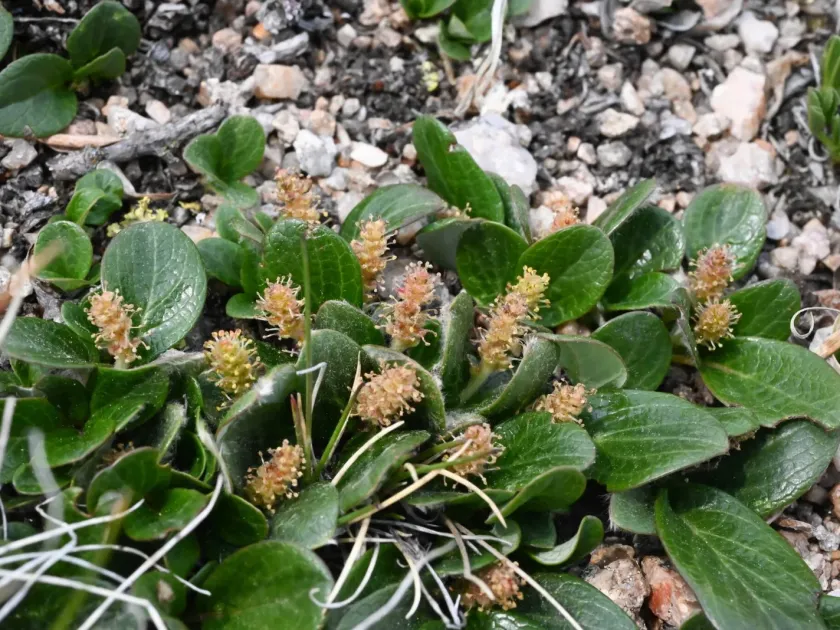
Snow willow (Salix nivalis) is a distinct species belonging to the Willow family (Salicaceae). It is a native plant primarily found in the alpine regions of North America, where it thrives in challenging, high-altitude environments.
This species is characterized by its prostrate, trailing growth habit, forming dense mats across the ground. The leaves are typically small, rounded, and possess a glaucous coating, an evolutionary adaptation that helps the plant survive intense alpine sunlight.
To successfully cultivate snow willow, one must provide well-drained, porous soil. It performs best in rock garden settings or alpine troughs where the roots are not subjected to constant moisture or waterlogging, which can prove fatal to the plant.
The plant demands cool climatic conditions and plenty of exposure to sunlight. While it is extremely hardy against cold temperatures, it struggles significantly in high-heat zones and humid lowland regions, requiring constant airflow to remain healthy.
Agrotechnical maintenance for Salix nivalis is minimal due to its slow-growing nature. It requires very little pruning, and fertilization should be kept to a bare minimum to prevent soft, succulent growth that is susceptible to winter damage.
Main diseases and pests
Fungal diseases remain the most significant threat, particularly powdery mildew and rust. These issues are almost always caused by poor ventilation and high humidity, which can be mitigated by planting in open, breezy locations.
In terms of insect pests, spider mites and leaf beetles are the primary concerns. These pests often target the plant during drought stress, so maintaining adequate hydration for the root system is a primary line of defense.
If chemical intervention is required, fungicides applied at the first sign of foliage spotting can prevent widespread infection. It is essential to ensure that foliage remains dry during the irrigation process to inhibit fungal spore development.
Winter dormancy provides a respite from most pests, though browsing animals such as rabbits and voles can damage the low-lying stems. Protective mesh or cages are recommended in areas with high wildlife pressure during the winter.
Overall, keeping the plant in its preferred environment—cool, rocky, and well-lit—is the best way to prevent threats. A healthy plant in the correct habitat is significantly more resilient to both disease and insect outbreaks.