
Magnificent willow
Salix magnifica
Description
Growing requirements
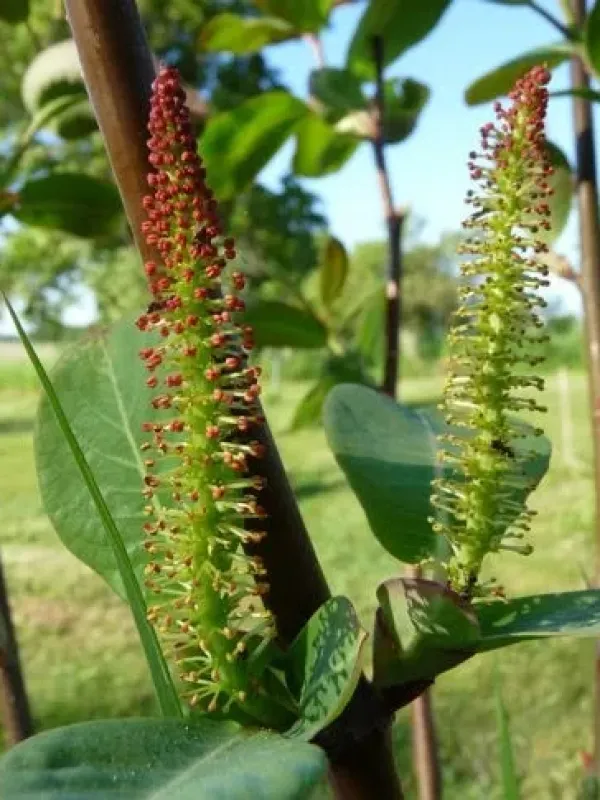
The Magnificent willow (Salix magnifica) is a distinctive species within the Salicaceae family, celebrated for its unusually large, blue-green, leathery leaves that resemble those of rhododendrons or magnolias. It grows as a deciduous shrub or a small tree, offering a sophisticated appearance uncommon for typical willow varieties.
Native to the high-altitude regions of Sichuan, China, this species is well-adapted to cool, humid environments. Its natural habitat is characterized by mountainous terrains with consistent moisture, which dictates its specific needs when cultivated in temperate gardens across the world.
For successful growth, Salix magnifica requires deep, fertile, and moisture-retentive soil that must be well-drained to avoid root rot. It thrives in slightly acidic environments and benefits from rich organic amendments, such as leaf mold or well-rotted compost applied annually around the root zone.
Regarding climate, the plant prefers sites with protection from desiccating winds and intense mid-day heat. It is relatively cold-hardy, yet requires a sheltered position during its early years of establishment to ensure that its branches do not suffer damage from frost or sudden temperature drops.
In terms of practical usage, this plant is primarily valued as an ornamental specimen. It is frequently employed in high-end landscape design as a focal point near water features or within specialty woodland gardens, providing a unique architectural element due to its striking, oversized foliage.
Main diseases and pests
Like many members of the genus Salix, this species can be susceptible to fungal infections, including willow scab and various leaf blights, particularly in regions with high humidity. Ensuring proper spacing and airflow between plants is the most effective cultural practice for preventing these issues.
Pest management involves monitoring for common willow pests such as aphids and willow leaf beetles. In instances of heavy infestation, integrated pest management strategies, including the use of horticultural oils or targeted biological controls, are recommended to preserve the integrity of the foliage.