
Yellow willow
Salix lutea
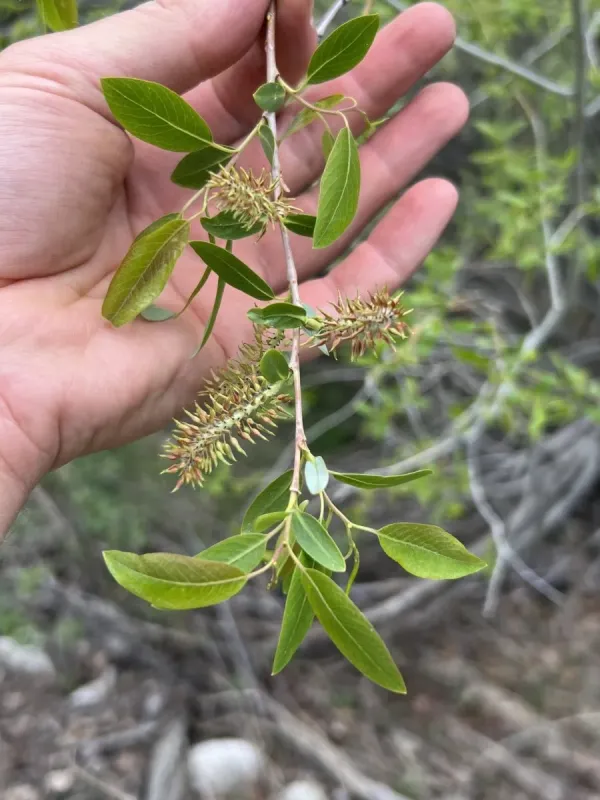
Description
Sowing dates
Yellow willow is typically propagated using hardwood cuttings. This method ensures that the new plants retain the genetic characteristics of the parent stock.
Cuttings should be approximately 20 to 30 centimeters in length and harvested during the dormant season, ensuring each cutting has at least three viable buds.
Planting occurs in early spring into well-prepared, moist soil. Mechanical planting machines are frequently employed in commercial settings to ensure precise spacing.
Proper depth is critical; the cuttings should be buried deep enough to maintain moisture around the basal nodes while ensuring at least one or two buds remain above ground.
Early establishment is sensitive to soil moisture levels. Irrigation during the initial weeks is recommended if rainfall is insufficient to prevent the cuttings from desiccating before root development.
Growing requirements
Yellow willow, a member of the Salicaceae family, thrives in conditions with high soil moisture. It is well-adapted to riparian zones and areas prone to seasonal flooding.
The ideal soil for this species is a loamy or alluvial substrate with a slightly acidic to neutral pH. It is generally tolerant of a wide range of soil textures provided they are not excessively dry.
This crop requires full sun exposure for optimal biomass production. Shading from neighboring structures or larger trees can significantly hinder growth rates and reduce wood density.
Yellow willow is hardy and capable of surviving cold winter temperatures, making it a reliable choice for temperate climate agricultural zones.
Maintaining weed-free conditions during the first two growing seasons is essential for young plantations to prevent competition for nutrients and water, which could otherwise stunt development.
Yield
The yield of yellow willow is measured by the total biomass harvested per hectare over a standard rotation period, which typically ranges from 3 to 5 years.
Commercial plantations can achieve dry biomass yields of 10 to 15 tonnes per hectare annually, depending on soil fertility and the frequency of management interventions.
Fertilization with nitrogen-based nutrients during the early stages of the rotation cycle can significantly enhance growth rates and improve the overall yield volume.
The productivity of the stool (the base of the plant) is highest in the first few cycles but gradually declines after 15-20 years, necessitating plantation renewal.
Maximizing yield also depends on the planting density, which is adjusted based on whether the intended product is fuel chips, fine basketry wood, or pulp fiber.
Main diseases and pests
Willow leaf beetles pose a significant threat to young plantations, as they can quickly strip foliage, leading to reduced photosynthetic capacity and stunted plant growth.
Fungal pathogens such as rust and anthracnose are common issues, particularly in high-humidity environments where poor air circulation allows spores to proliferate.
Rodent damage to the bark of young stems during the winter months can cause localized necrosis and provide entry points for secondary pathogens.
- Applying fungicidal sprays preventatively in early spring.
- Ensuring proper spacing to facilitate air movement within the canopy.
- Regular monitoring and removal of infected debris from the plantation site.
Integrated pest management strategies are encouraged to promote natural predators, thereby minimizing reliance on synthetic pesticides.
Harvesting
Harvesting is conducted during the dormant winter season, once leaves have fallen and the sap has ceased to flow, ensuring the highest quality of woody material.
For bioenergy purposes, tractor-mounted forage harvesters equipped with specialized headers are used to cut and chip the willow stems in a single pass.
The cutting height is kept close to the ground to maximize the number of new shoots generated from the stool during the subsequent growing season.
Post-harvest management involves organizing the material for transport and ensuring appropriate storage conditions to prevent moisture accumulation and decay.
Sustainable harvesting practices ensure that the root systems remain vigorous, allowing the plantation to regenerate successfully for many consecutive rotations.