
Pacific willow
Salix lasiandra
Description
Growing requirements
The Pacific willow (Salix lasiandra) is a deciduous tree or large shrub belonging to the Salicaceae family. Native to western North America, it is primarily found in riparian habitats, thriving along stream banks, river corridors, and moist meadows where water availability is high and consistent.
This species is highly moisture-dependent, making irrigation or proximity to permanent water sources a prerequisite for healthy growth. It is intolerant of prolonged drought conditions, which can lead to significant physiological stress and reduced growth rates or tree decline.
Pacific willow requires nutrient-rich, moist soils to reach its full development. It performs best in alluvial soils that provide good drainage while maintaining high moisture levels. Soil pH should ideally be neutral or slightly acidic to ensure optimal nutrient uptake by the root system.
Exposure to full sun is essential for this species. While it may tolerate partial shade, optimal biomass production and the development of its characteristic shiny foliage require high light intensity. Shade-grown specimens often exhibit spindly growth and lower overall vigor.
Regarding climate, Salix lasiandra is well-adapted to temperate regions. It possesses good frost resistance, though young specimens should be protected from extreme, desiccating winds during the early stages of establishment to prevent tissue damage and ensure uniform growth.
Yield
Pacific willow is increasingly utilized in bioenergy sectors as a source of renewable woody biomass. Its rapid growth and inherent ability to coppice—regenerating vigorously after being cut back—make it a sustainable crop for short-rotation forestry and sustainable energy projects.
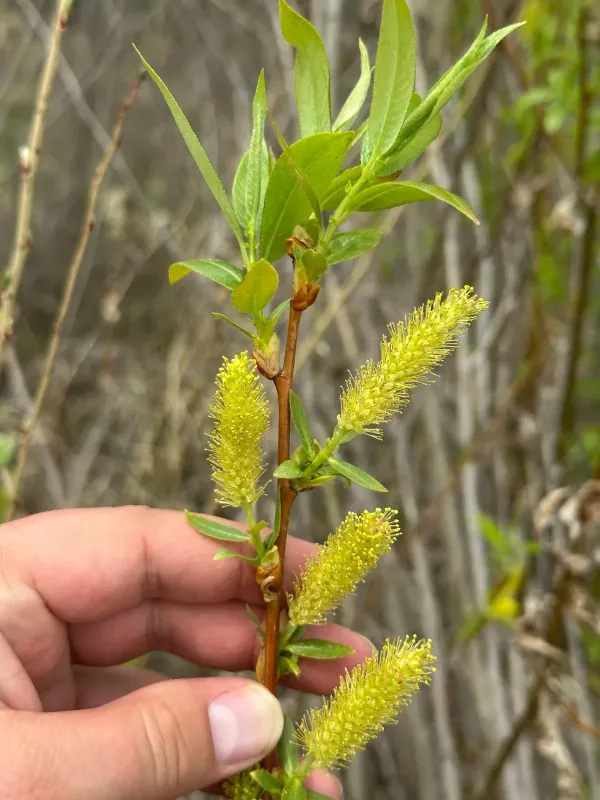
In landscaping, this willow is highly valued for its aesthetic appeal, featuring attractive, lance-shaped leaves with a glossy surface. It is frequently employed in riparian restoration and as a decorative element in public parks and private gardens situated near water bodies.
The species provides significant ecological benefits, including soil stabilization and erosion control along embankments. Its dense, fibrous root system is highly effective at holding soil particles together, thereby preserving the integrity of riverbanks and preventing sediment runoff.
For small-scale artisanal use, the shoots of the Pacific willow can be harvested for basketry and weaving. The flexibility of the wood, when harvested at the appropriate stage of maturity, allows for the creation of durable and aesthetically pleasing woven goods.
Yield management in commercial plantations depends on careful spacing and pruning regimes. By maintaining optimal density and timing the harvest cycles, growers can maximize the annual volume of harvestable wood while ensuring the long-term vitality of the rootstock.
Main diseases and pests
Like many species within the Salix genus, the Pacific willow is susceptible to various fungal pathogens, including leaf rust and powdery mildew. These issues often arise in environments with poor air circulation or stagnant water conditions around the base of the plant.
Insect pests, such as willow leaf beetles and various aphid species, can significantly impact the foliage. Severe infestations can cause defoliation, which hampers the photosynthetic capacity of the tree and reduces the overall yield of the plantation.
Effective pest and disease control requires an integrated approach. Regular monitoring, coupled with sanitary pruning to remove infected branches, is crucial for preventing the spread of spores and reducing the habitat for harmful insect populations within the grove.
When chemical interventions are necessary, systemic fungicides and eco-friendly insecticides should be applied according to local agricultural regulations. Minimizing chemical runoff into nearby water bodies is a critical consideration for plantations located in riparian zones.
During the winter months, bark protection is essential to prevent damage from small mammals or rodents. Physical barriers, such as protective wraps or mesh, provide an effective defense against girdling, which could otherwise prove fatal to young or immature willow trees.