
Red willow
Salix laevigata
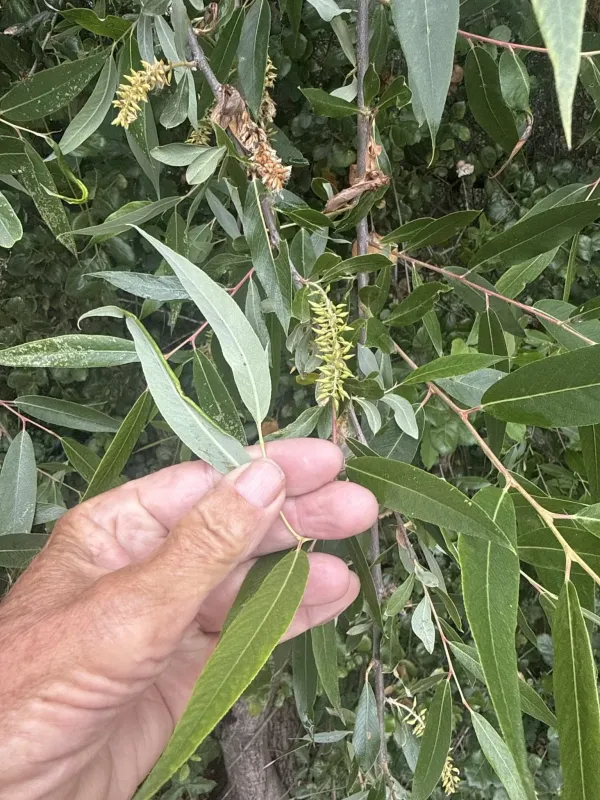
Description
Growing requirements
Red willow (Salix laevigata) is a deciduous tree species belonging to the Salicaceae family, native to the western regions of North America, particularly California and surrounding areas.
This crop thrives in riparian zones, demonstrating a strong preference for deep, nutrient-rich, and moist soils. It is frequently found growing along stream banks, riverbeds, and wet meadows where constant water access is guaranteed.
Agrotechnical requirements include choosing sites with full sun exposure to support vigorous growth and the development of its characteristic shiny, lanceolate leaves.
In terms of climatic adaptability, the species prefers temperate zones. It is highly valued for its ability to stabilize soil and prevent water erosion in flood-prone areas, making it a key plant for environmental restoration.
Beyond ecological functions, the wood of Salix laevigata has historical and practical uses in small-scale carpentry and the creation of traditional craft items, showcasing its versatile economic value.
Main diseases and pests
The primary threats to Salix laevigata involve fungal infections, such as anthracnose and leaf spot, which are exacerbated by cool, wet weather and poor air circulation within the tree canopy.
Insect pests, particularly willow leaf beetles (Chrysomelidae), pose a significant threat by defoliating the tree and significantly reducing its ornamental and biological value during the peak growing season.
Aphids and scale insects are frequently encountered on younger stems, leading to stunted growth and potentially facilitating the entry of secondary diseases through the sap-feeding wounds.
Root rot remains a critical concern if the soil remains waterlogged without proper oxygenation, which can occur in poorly managed or excessively dense planting conditions.
Effective management strategies require integrated pest control, including sanitary pruning to remove infected tissue and the application of horticultural oils or fungicides when pest populations threshold is exceeded.