
Dewy willow
Salix irrorata
Description
Growing requirements
Salix irrorata, commonly known as the dewy willow, is a deciduous shrub belonging to the Salicaceae family. Originating from the mountainous regions of Mexico, this species has gained popularity in temperate gardens for its unique aesthetic and structural qualities.
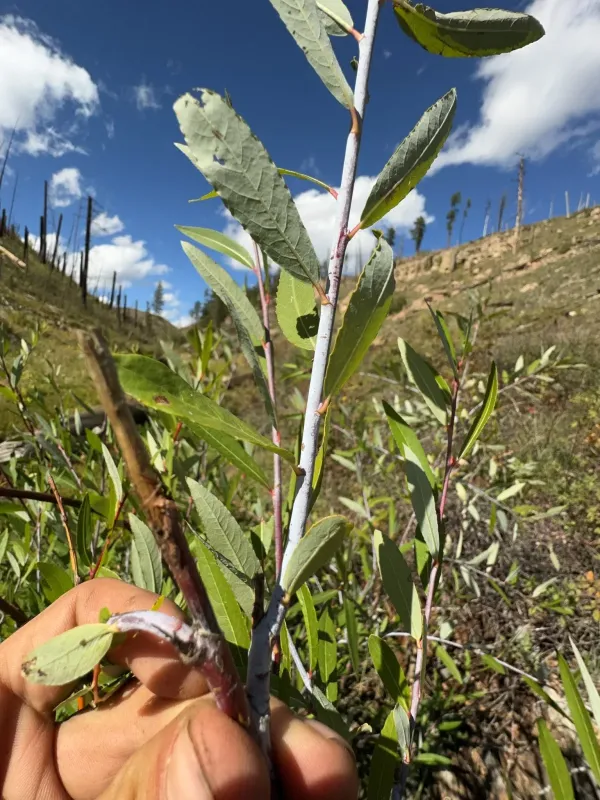
The plant is best known for its striking, waxy blue-white coating that covers its younger stems, resembling morning dew. This feature makes it a standout choice for winter landscapes, especially when planted against dark backgrounds or stone features.
Regarding cultivation, the dewy willow thrives in full sun, which is essential to maintain the intensity of its distinctive stem coloration. It prefers moist, fertile, and well-drained soils, ideally located near water bodies or in sites where the soil moisture is consistently maintained.
Soil structure should be loamy or sandy loam with a neutral to slightly acidic pH level. While it loves water, poor drainage can lead to root suffocation, so incorporating organic matter and gravel into the planting site is recommended for optimal root health.
Regular maintenance involves yearly pruning of older, less colorful stems to encourage the growth of vigorous new shoots. Pruning should be done in early spring, just before the growing season begins, to ensure the plant recovers quickly and produces the best waxy stems for the following winter.
Main diseases and pests
Like many Salix species, the dewy willow is susceptible to fungal issues such as powdery mildew and various leaf spot diseases. These are most prevalent in humid, stagnant air environments where moisture sits on the foliage for extended periods.
Pests, particularly willow leaf beetles and aphids, can cause significant damage to the leaves during the peak growing season. Vigilant monitoring is necessary to identify early infestations before they lead to severe defoliation of the shrub.
Management of these threats involves a combination of cultural practices and targeted chemical interventions. Keeping the area under the shrub clean of fallen debris helps prevent the overwintering of pathogens and harmful insect pupae.
For chemical control, use appropriate insecticides or fungicides at the first sign of trouble. Always follow label instructions to protect beneficial insects, such as bees, which may frequent the area during the willow's flowering phase.
Finally, ensuring sufficient spacing between plants is a critical preventative measure. Proper air circulation significantly reduces the risk of fungal outbreaks, keeping the dewy willow healthy and aesthetically pleasing throughout the year.