
Swiss willow
Salix helvetica
Description
Growing requirements
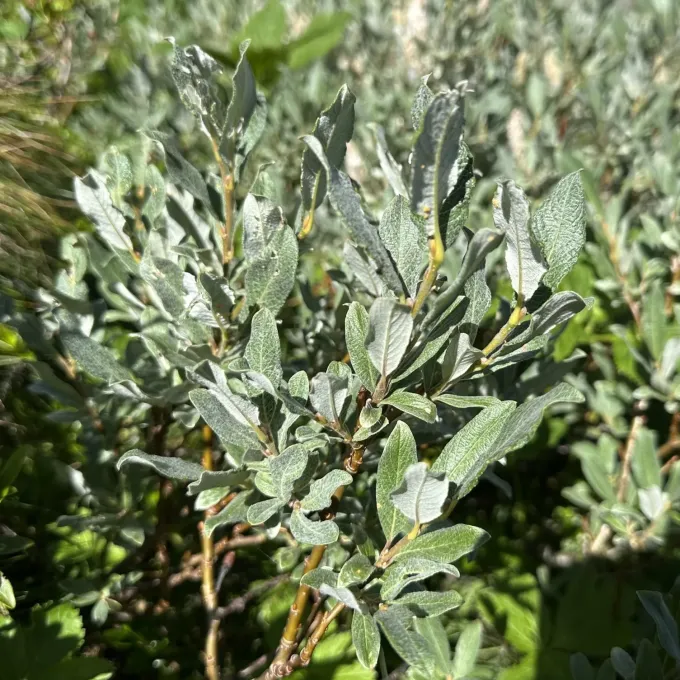
The Swiss willow (Salix helvetica) is a dwarf shrub belonging to the Salicaceae family. Native to the alpine regions of Central Europe, it is perfectly adapted to rocky slopes and high-altitude climates, where it grows as a low-spreading mat or a small bush.
This species thrives in sunny locations with well-drained, nutrient-rich soil. It is highly valued for its silvery, pubescent leaves and compact growth habit, making it an ideal choice for rock gardens, containers, or small landscape compositions.
Soil requirements involve a preference for neutral to slightly acidic pH levels. Good drainage is critical, as stagnant water can lead to root system decay, which is the primary cause of plant failure in non-native environments.
Cultivation requires consistent moisture levels, especially during dry spells in the summer. Mulching is highly recommended to protect the root zone from temperature fluctuations and to maintain the humidity levels required for healthy growth.
Pruning should be performed early in the spring to remove dead wood and encourage dense branching. This simple maintenance procedure ensures the plant remains vigorous and aesthetically pleasing throughout the growing season.
Main diseases and pests
The main pests affecting Salix helvetica are willow leaf beetles and aphids, which feed on the foliage and can deform new shoots. Systematic inspection and the use of targeted insecticides are recommended to maintain plant health.
Rust diseases represent the most common fungal threat, typically appearing as orange or brown spots on the leaves. Improved air circulation around the shrub is the best preventative measure against these infections.
Powdery mildew may occur during periods of high humidity combined with stagnant air. Applying fungicide treatments and ensuring the plant is not overcrowded can help mitigate this risk effectively.
Crown gall can occasionally affect the root system or the base of the stems, leading to stunted growth. Affected plants should be pruned heavily or removed to prevent the spread of the pathogen to neighboring specimens.
Managing the plant's environment is the best defense against threats. Providing enough space and avoiding overhead watering during late evening helps keep the foliage dry and less susceptible to common willow diseases.