
Silky-glaucous willow
Salix glaucosericea
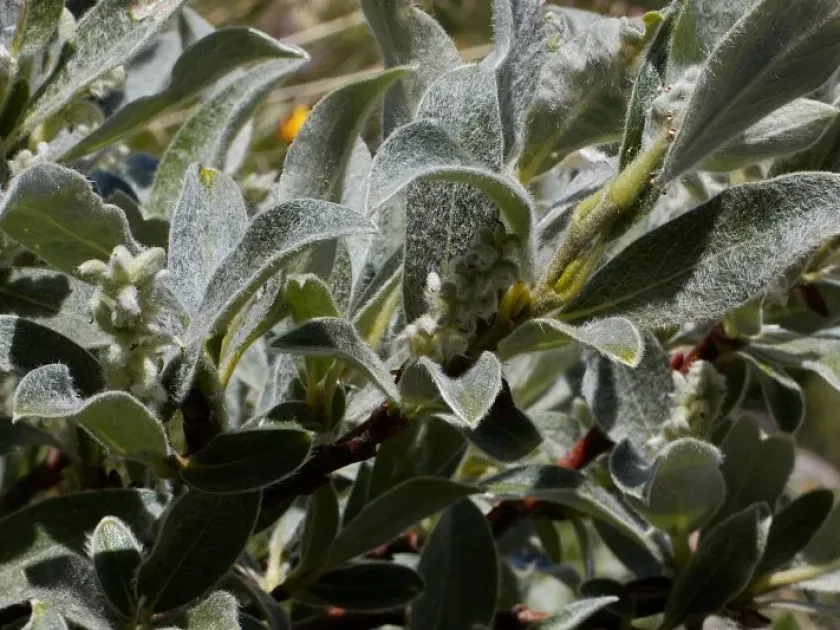
Description
Growing requirements
Salix glaucosericea, commonly known as the silky-glaucous willow, belongs to the Salicaceae family. It is a compact, often prostrate shrub adapted to the challenging environments of alpine and subalpine zones.
The plant originates from the mountainous regions of Europe, particularly the Alps. It is naturally adapted to rocky slopes, scree deposits, and locations with thin, nutrient-poor, but well-aerated soils.
This willow is light-demanding and thrives best in full sun. It requires excellent drainage as its root system is highly adapted to mineral-rich, stony substrates rather than heavy or waterlogged garden soils.
It displays remarkable hardiness, having evolved to survive extreme temperature fluctuations, harsh winds, and long-lasting winter snow cover characteristic of high-altitude ecosystems.
In cultivation, the most important aspect of its care is maintaining a substrate that mimics its natural habitat: stony, gritty, and lean, which prevents the development of root-related pathogens.
Main diseases and pests
Powdery mildew is one of the most significant threats to Salix glaucosericea in garden settings, especially if the air circulation around the plant is insufficient or if humidity levels remain too high.
Rust fungi can also affect the foliage, causing discolored spots and premature leaf drop, which significantly impacts the aesthetic value of this ornamental dwarf shrub.
Leaf-eating beetles are common pests that target the soft, silky young leaves during the growing season, potentially leading to defoliation if left unmanaged.
Spider mites represent a risk during dry, hot spells. They cause stippling and yellowing of the leaves, which can make the plant look sickly and reduce its vigor during the peak season.
Good agricultural practices, including proper site selection and thinning out overgrown parts, are essential for keeping the plant healthy and minimizing the need for chemical treatments.