
Stinking willow
Salix foetida
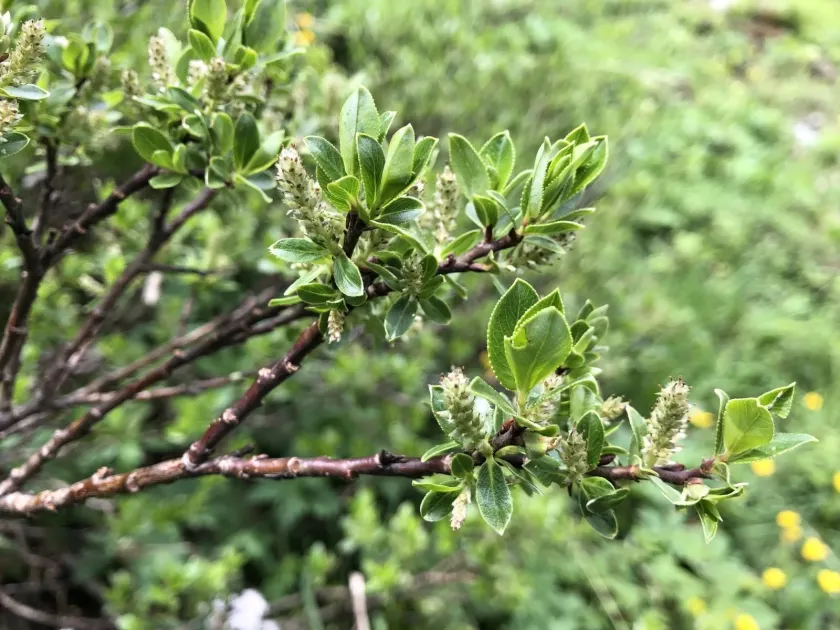
Description
Growing requirements
Stinking willow (Salix foetida) is a member of the Salicaceae family, native to the mountainous regions of Europe, specifically the Alps and Pyrenees. This deciduous shrub is highly valued for its ability to adapt to rocky environments and cold climates.
Botanically, it is recognized by its dense, pubescent foliage and a characteristic odor released when leaves are crushed. The plant remains relatively compact, making it a distinct choice for specialized landscape designs and alpine gardens.
The plant has strict climate requirements, preferring cool and humid conditions. It performs poorly in arid environments and requires consistent soil moisture to thrive throughout the growing season, especially during summer months.
When it comes to soil, Salix foetida prefers well-drained, nutrient-rich substrates that can retain some moisture. It is essential to ensure that the site is not prone to long-term waterlogging, which could cause root rot in this species.
Regarding its utility, the culture is predominantly used for decorative purposes, as well as in ecological restoration projects. Its root system is effective in stabilizing light slopes and preventing soil erosion in damp, mountain-like garden settings.
Main diseases and pests
Salix foetida is vulnerable to common willow diseases, including leaf rust and various fungal spots. These pathogens are most prevalent in areas with poor airflow and high humidity levels during the peak of summer.
Insect pests such as leaf beetles represent a significant threat to foliage health. If left unchecked, these insects can defoliate the plant, severely compromising its aesthetic appeal and overall physiological vigor.
Integrated pest management is recommended for this crop, emphasizing the importance of removing leaf litter where spores and eggs overwinter. This cultural practice significantly reduces the risk of recurrent infestations.
Chemical control should be applied judiciously using authorized fungicides and insecticides. Targeted spraying at the first sign of symptoms is more effective than broad-spectrum treatments, which may harm beneficial garden insects.
Finally, pruning plays a vital role in disease prevention. By thinning out the crown, gardeners improve light penetration and air circulation, creating an environment that is less hospitable to fungi and moisture-loving pests.