
Rosemary willow
Salix eleagnos
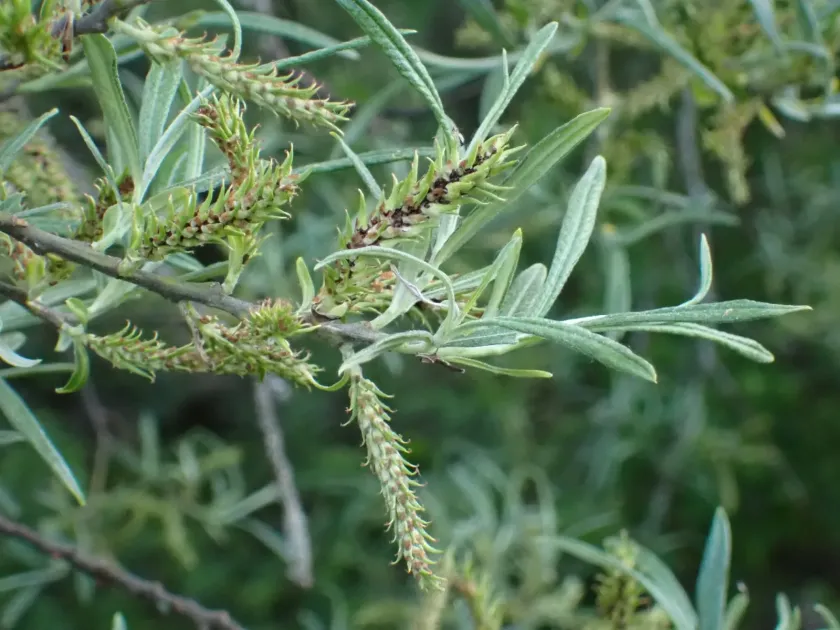
Description
Sowing dates
Propagation of the rosemary willow (Salix eleagnos), a member of the Salicaceae family, is most efficiently performed by vegetative means, specifically through stem cuttings. The best time for collecting woody cuttings is early spring, before the sap begins to flow actively.
Prepared cuttings are planted directly into the open ground at their permanent location or into nursery beds for further development. Rooting occurs quickly if the soil moisture is kept at a consistent, high level throughout the initial growth phase.
Greenwood cuttings can also be used during the summer months, although this method requires careful control over air humidity and temperature to prevent the soft shoots from drying out before roots form.
Seed propagation is rarely practiced because willow seeds lose viability very quickly after ripening. If seeds are used, they must be sown immediately after collection to ensure a successful germination rate.
When creating living fences or stabilizing slopes, seedlings should be planted at intervals of 0.5 to 1 meter, which encourages the shrubs to form a dense root system and a cohesive canopy.
Growing requirements
The rosemary willow is an ecologically adaptable plant, though it thrives best in moist environments and is naturally found along the banks of mountain streams and rivers.
The culture prefers well-drained, sandy, or gravelly soils but is highly capable of adapting to various soil types, including poor rocky substrates, provided there is an adequate and consistent water supply.
This species is exceptionally cold-hardy, allowing it to be grown in many temperate regions without the need for winter protection, as it is fully capable of surviving harsh winter conditions.
For optimal development and to maintain its characteristic silvery foliage, the rosemary willow requires full sun exposure. In shaded areas, stems become leggy, and the plant's overall decorative value is significantly diminished.
The plant exhibits excellent wind resistance, making it a reliable choice for establishing windbreaks in open spaces and exposed landscapes.
Yield
The economic use of Salix eleagnos is primarily focused on phytoremediation, landscape architecture, and the production of flexible rods for basketry. Yield is defined by the plant's ability to rapidly produce long, pliable shoots.
The plant has a high regenerative capacity; regular pruning stimulates the growth of new, strong, and flexible stems, which serve as premium raw material for various types of basketry and garden structural projects.
In erosion control and stream bank stabilization projects, the willow is highly valued for its vigorous and deep root system, which effectively anchors the soil and prevents structural washouts along riverbanks.
Additionally, the willow serves as an early-season honey plant, providing bees with essential pollen and nectar in early spring, which supports the healthy development of bee colonies.
The harvested biomass can be processed into organic fertilizers or used as a high-quality mulching material for horticultural and gardening applications.
Main diseases and pests
The primary threats to the rosemary willow's health are fungal diseases such as willow scab and various leaf spots, which thrive in conditions of high air humidity and poor air circulation within the shrub's canopy.
Among pests, the willow leaf beetle poses the greatest danger, as it can cause significant defoliation in a short period, thereby reducing the plant's aesthetic and vigor.
During prolonged drought, the plant may become susceptible to aphid and spider mite infestations, which extract sap from young foliage, leading to deformation and potential premature leaf drop.
To mitigate these risks, it is recommended to conduct regular sanitary pruning to remove dead or diseased branches, which can harbor fungal spores or pest larvae over the winter.
- Regular application of insecticides to control leaf-eating insects.
- Use of fungicides at the first sign of fungal infection.
- Maintaining proper spacing to ensure adequate air movement around the shrub.