
Pussy willow
Salix discolor
Description
Growing requirements
The Pussy willow (Salix discolor) is a deciduous shrub or small tree belonging to the Salicaceae family. Native to North America, this species is naturally found in wetland areas, riverbanks, and marshes, thriving in moist environments where other species might struggle.
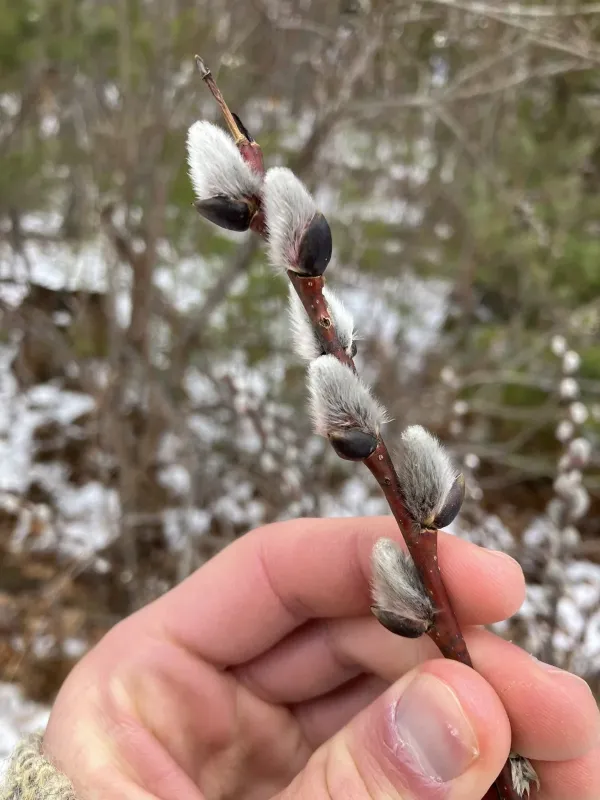
Botanically, it is recognized for its iconic soft, fuzzy catkins that emerge in late winter or early spring before the foliage appears. The leaves are typically lance-shaped with a serrated margin, possessing a distinct dark green color on top and a pale, glaucous underside, which serves as a key identifying characteristic.
The plant has specific moisture requirements and thrives best in rich, moist soil. While it is highly adaptable, it shows optimal growth rates when planted in areas where the soil remains consistently damp throughout the growing season, making it an excellent choice for low-lying areas in a garden.
Full sun is essential for the Pussy willow to maintain its structural integrity and achieve abundant flowering. When grown in partial shade, the plant tends to become leggy, and its overall aesthetic appeal decreases. It is highly cold-hardy, capable of surviving harsh winters with ease.
Horticulturally, it is prized as a decorative element in landscapes, particularly for its early spring interest. Furthermore, it serves a critical role as an early-season nectar source for pollinators, supporting biodiversity in the garden ecosystem during a time when few other plants are active.
Main diseases and pests
Common pests affecting Salix discolor include various aphids, willow leaf beetles, and scale insects. These pests can cause localized leaf damage or stunted growth if left unmanaged, necessitating periodic inspections and prompt treatment when infestations are spotted.
Disease issues are often linked to environmental stress, with leaf spot and powdery mildew being the most common fungal threats. These pathogens typically flourish when humidity is high and airflow within the shrub's canopy is restricted.
To prevent disease, gardeners should focus on proper spacing and regular pruning. Thinning out the branches improves air circulation and reduces the moisture-trapping environment that favors the development of fungal spores.
In cases of severe infestation or infection, the application of horticultural oils or specialized fungicides may be required. However, the most effective management strategy remains the maintenance of plant vigor through proper watering and fertilization.
Sanitation is key to long-term health; removing and disposing of infected plant debris at the end of the season prevents the overwintering of pathogens near the root zone, ensuring a cleaner start for the next spring season.