
Caspian willow
Salix caspica
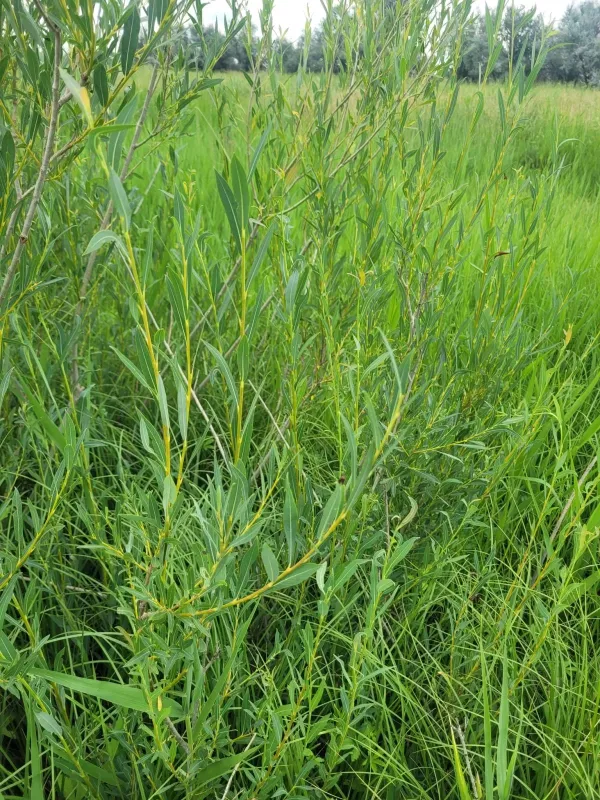
Description
Sowing dates
Propagation of Salix caspica is primarily achieved through the planting of dormant cuttings taken from healthy one-year-old shoots.
The optimal planting window is early spring, just before the buds begin to break, ensuring the cuttings have enough time to establish roots.
Cuttings should be approximately 20 to 30 centimeters long, containing multiple viable buds to promote vigorous growth during the first season.
They are planted into moist, well-prepared soil with specific spacing to ensure each plant receives adequate sunlight and airflow for optimal development.
Consistent soil moisture management during the initial weeks is critical to ensure high survival rates and uniform establishment across the plantation.
Growing requirements
Caspian willow is a member of the Salicaceae family and is recognized as a hardy, fast-growing shrub with significant environmental adaptability.
It thrives in open, full-sun conditions, as any degree of shade can significantly impede its growth rate and total biomass production.
The plant prefers sandy or loamy moist soils and is naturally adapted to riparian zones and riverbanks where moisture is constantly available.
It displays remarkable tolerance to periodic flooding, making it an excellent candidate for erosion control and the restoration of degraded wetland areas.
Regarding climate, it is very robust, capable of withstanding cold winters and thriving in various temperate climates without specialized winter protection.
Yield
Yield metrics for Caspian willow typically focus on either the annual production of high-quality weaving rods or total dry wood biomass for fuel.
Under intensive management systems, yields of up to 15 tons of dry wood per hectare are attainable annually once the plantation matures.
Management practices such as regular fertilization and optimal plant density significantly influence the total quantity and quality of the produced harvest.
For basketry applications, the yield is measured by the uniformity and length of individual rods, which are optimized through dense plantation patterns.
Regular coppicing, or cutting the shrub back to the ground level, ensures sustained yields and prevents the plant from becoming overly woody or unproductive.
Main diseases and pests
The main threats to Salix caspica include fungal diseases like rust and bark necrosis, which often thrive in dense plantings with poor air circulation.
Pests such as willow leaf beetles and various aphid species can cause defoliation, thereby reducing the plant's overall vigor and wood quality.
Effective management involves monitoring, removing affected limbs, and maintaining healthy soil conditions to reduce the plants' susceptibility to these stressors.
Integrated pest management, prioritizing biological controls and environmental maintenance, is preferred over the heavy use of chemical agents.
Additionally, small mammals like voles can cause significant damage to the bark of young willows during winter, necessitating protective measures in high-risk areas.
Harvesting
The harvest is conducted during the dormant season, which allows for the collection of high-quality wood without high sap content.
Manual harvesting is common for basketry material to select for specific diameters, while mechanical harvesters are used for large-scale energy plantations.
Harvested material must be processed or bundled promptly to ensure it dries correctly and maintains its structural integrity for weaving or processing.
Proper harvesting techniques include clean cuts near the base, which allows the rootstock to regenerate successfully for the following growing season.
Proper storage involves keeping bundles in a dry, ventilated area to prevent rot or fungal growth, ensuring the product maintains its market value.